Pages

Showing posts with label the black hole. Show all posts

08 April 2012

Robbed and ruined by a British court on the orders of the CIA... and we couldn't tell a soul: The chilling story of how secret justice cost a couple their £5m home - and £700m business


 By David Rose
|

Silent ordeal: Margaret Bentham and her husband Stuart lost their £5m home
Despite the years of cruel reality, Margaret Bentham still seemed incredulous as she told her story, a story she once thought she could never share.
But with quiet dignity she summed up the ordeal she and her businessman husband Stuart, a former British Army officer, have endured at the hands of the CIA.
‘We were robbed of a business worth millions,’ she said. ‘We were plunged into financial ruin. But the worst thing was, not only were we deprived of justice, we couldn’t tell a soul.’
In an exclusive interview, Mrs Bentham told The Mail on Sunday how the CIA decided a civil court case about the Afghan mobile phone company he had helped to establish was too ‘sensitive’ to air in public.
It used draconian legal powers to shut down the case – so destroying not only the Benthams’ livelihood, but any prospect of redress after Mr Bentham alleged the company had been stolen from him.
‘We lost our £5 million flat in Belgravia,’ said Mrs Bentham, 50. ‘We’d had a thriving telecoms business in London employing 23 people, and we lost that too.
The gagging order imposed by a US court meant I couldn’t even tell our friends what was wrong or Stuart could have gone to prison. It was  absolutely Kafkaesque.’ Even now, Mr Bentham could be extradited and jailed if he gave an interview.
The Benthams’ nightmare was made possible by a US legal procedure known as the State Secrets Privilege.
But as Tory MP David Davis disclosed last month when he set out the Benthams’ story in the Commons, an alarmingly similar system will soon exist in Britain, if the Coalition’s  current Green Paper on Justice and Security becomes law.
The public part of the court judgment that destroyed Mr Bentham’s fortune is two words long: ‘Case dismissed.’ The reasons remain secret, while he is subject to an indefinite legal gag.
Such secret judgments have never been permitted in Britain. Under the Green Paper, they would become routine.
Last week, comments by Deputy Prime Minister Nick Clegg and a joint letter to MPs by Home Secretary Theresa May and Justice Secretary Ken Clarke together suggested that the Government is preparing a partial U-turn on the proposals.
In an apparent concession to critics, it may water down plans for secret inquests, and restrict secret hearings to a ‘tiny number’ involving national security. Unfortunately, that is exactly the category responsible for the Benthams’ ordeal.
‘The security services are still feeding Government Ministers with misleading claims to justify abhorrent and unjust proposals,’ Mr Davis said yesterday. ‘They are still seeking to bolster their collapsing argument  for undermining centuries of British judicial rights.’

Partners: Mr Bentham, left, Mr Bayat, centre, and Lord Michael, far right in Taliban-ruled Kabul in 1998
Even if the Green Paper is changed in the way suggested last week, he added, its proposed closed hearings, secret evidence and vetted ‘special advocates’ would allow security agencies to cover up incompetence and embarrassment by citing national security.

As Mr Davis revealed in the Commons, that is exactly what happened with the Benthams. In their case, the embarrassment could hardly have been greater: what the use of the State Secrets Privilege did was to conceal evidence of a massive CIA failure that stymied a real possibility of preventing the 9/11 attacks.

The background to the alleged fraud against Mr Bentham, 63, and his business partner Lord Michael Cecil, 52, a brother of the Marquess of Salisbury, goes back to 1998, when they went into business with Ehsanollah Bayat.
Mr Davis described him in the Commons as ‘a Kabul-born American citizen on friendly terms with the highest echelons of the Taliban government and particularly its leader, Mullah Omar’.

Mr Bayat had the connections to acquire the licence to build Afghanistan’s first mobile phone, internet and international call system – Mr Bentham and Lord Michael the business expertise.
But, as Mr Davis said, Mr Bayat had a secret: he was an informant for the FBI, the main US domestic counter- terrorism force. The link made an opening for Operation Foxden, a scheme the FBI planned to run jointly with the National Security Agency (NSA), the US electronic eavesdropping organisation.
The NSA offered $30 million and technical assistance, said Mr Davis. The plan was to build extra circuits into all the equipment installed, enabling the US to ‘record or listen live to every single landline and mobile phone call in Afghanistan’ and ‘monitor the telephone gateways channelling international calls in and out of the country – gateways already being used by Bin Laden, Mullah Omar and their associates, thanks to the satellite phones given by Mr Bayat to Taliban ministers as gifts’.

By the beginning of 2000, after all the main partners had made several visits to Afghanistan, the project was at an advanced stage, and could have been fully functional within months – 18 months or more before 9/11.

Osama bin Laden
Recently, Mr Bayat has claimed he never had connections with US security agencies or the pre-9/11 Taliban government. But Mrs Bentham said that in the Nineties he seemed to make no secret of such links.

‘I remember one time when we flew in to Newark, New Jersey, and Bayat met us off the plane,’ she said. ‘He was with two FBI agents. We went to their office. Then they took me to the station so I could go shopping in New York while they had their meeting.’

But just as the project seemed to be on the brink of coming to fruition, it was wrecked by what Mr Davis termed a ‘turf war’ between the FBI and NSA on one side, and the CIA, which wanted to control it.

The consequence, as the agencies bickered in Washington, was that nothing happened for 20 months. By the time these bureaucratic obstacles had been cleared, it was too late.

A meeting to get the scheme going again, attended by Mr Bentham and Lord Michael, took place in New York in a hotel overlooking the World Trade Centre on September 8, 2001 – three days before the attacks.

Mr Davis commented: ‘Of course, we cannot say for certain that if US intelligence agencies had managed to tap the Afghan phone network sooner, we would have intercepted evidence in time to stop the 9/11 attacks, but it seems quite likely.’

After 9/11, the Taliban were toppled by US-led forces. Very soon after that, Lord Michael, Mr Bentham and their colleagues, working with Mr Bayat’s company Telephone Systems International (TSI), installed the very network that had been planned two years earlier. The Britons ordered and paid for most of the equipment and ran the project out of London.

Once operational in April 2002,  the firm became a licence to print money and is now said to be worth about £700 million.
The Mail on Sunday has copies of official US documents, signed by Mr Bayat in May 2002, stating that Mr Bentham and Lord Michael each were entitled to 15 per cent of the shares: their holdings, in other words, should now each be worth more than £100 million.

Instead, said Mrs Bentham, she and her husband are in straitened circumstances, and live in a rented house, dependent for holidays on hospitable friends.
‘We were living  a very comfortable life. And then it changed completely. We had no idea what we were dealing with, and the terrifying thing is what happened to us could happen to anyone.’

Home Secretary Theresa May and Justice Secretary Ken Clarke together suggested that the Government is preparing a partial U-turn on the proposals to hold more trials in secret
In the autumn of 2002, having offered to buy out Mr Bentham and Lord Michael for a ‘derisory’ sum that did not even cover the cost of the equipment they bought, Mr Bayat sued them for ‘deceit and  conspiracy’, and, simultaneously, simply denied they had any legal entitlement to shares in TSI.
They had copious documentation, and, their lawyers believed, a cast-iron case. But as Mr Davis told MPs, this was no ordinary commercial squabble: ‘The US intelligence agencies feared the consequences if the truth about their infighting emerged and they were determined to stop that truth from emerging.’
First, they offered Bayat $1 million for his legal fight – part of a more general plan to exclude British citizens and British agencies from the ongoing phone intelligence operation. Then, when the Britons’ lawyers refused to back down, ‘CIA officers threatened them, warning the whole case would be shut down if they continued’.
Finally, in November 2004, came the use of the State Secrets Privilege. The effect was not only to close down the case immediately, but  to expunge all trace from court records.
Lord Michael and Mr Bentham were subject to a gagging order so severe that when they tried to reopen the case in London, they were forbidden on pain of contempt of court from discussing any aspect of the intelligence background with their own lawyers.
Although there were hearings in London, which the Britons lost for technical legal reasons, the British courts had little idea of what had actually happened. ‘The State Secrets Privilege meant that the US agencies were restricting what could be said in court in England,’ Mrs Bentham said.
‘I couldn’t speak to friends, and I felt pretty sure our phone calls  and emails were being monitored. Meanwhile, legal fees meant we were facing a colossal drain on our cash. Imagine: you have to sell your home, but you can’t tell anyone why.
‘So we just stopped going out socially, because people would ask, “How are things?” and we couldn’t even begin to answer. It’s only now, after the parliamentary debate, that at last people know.’
The worst moment, she recalled, was when the State Secrets Privilege was deployed. ‘They showed the judge some kind of statement that we couldn’t see, and he shut down the case next day for reasons we weren’t allowed to read. And that’s the kind of thing that’s going to happen here if the Green Paper becomes law.’
Later, she said, the Benthams’ American lawyers asked a US judge whether their British lawyers could see the secret judgment and gagging order in strict confidentiality, so that at least they could advise them whether they should try to pursue the case in London. The judge refused. 
They also tried to get the State Secrets Privilege reversed in a  federal US appeals court. They lost again – and the appeal court’s 17-page decision is also strictly secret.
Mrs Bentham said: ‘The lesson is that the US legal system is perfectly willing to condone the theft of our assets. What gets me is that one of the main reasons the British Government has justified the Green Paper is to protect American secrets.’
At the end of the Commons debate, Foreign Office Minister Jeremy Browne gave the Benthams a glimmer of hope. He said the Prime Minister had been aware of their plight for months and would in due course respond to their representations.
Meanwhile, Mr Davis said the case highlighted a fundamental inequality between Britain and the US: that American agencies could apparently dictate what British citizens could talk about in British courts  – even the very use of the State Secrets Privilege which had enabled such secrecy in the first place.
‘It’s just not good enough to say that restricting the Green Paper proposals to national security cases will make them less obnoxious,’ Mr Davis said yesterday. ‘Once you let security trump the rule of law, injustice such as this is inevitable.’

20 August 2011

The Devil's Double Book.
My dear friends, I promised you a new edition of The Devil's Double, here is the new cover of the book, it will be out before Christmas 2011, I promise and at a reasonable price, unlike the idiots on Amazon. I'm donating my royalties to the Iraqi Orphans, America does the damage and it's up to us to try and fix the country, I urge my American friends to tell the administration to stop supporting Dictators and "liberating" us from the Dictators that they support and have installed in our countries.
Best regards to all.
Latif Yahia

05 August 2011


What a cad!
He shot to fame playing the romantic lead in the most successful British film of all time, but there’s a hint of menace about Dominic Cooper’s performances that could make him this generation’s most lovable Hollywood rogue, writes DONALD CLARKE

EVERY GENERATION needs a cad. Funny cads like Terry-Thomas. Brooding cads like James Mason. Smooth cads like George Sanders. The dangerous lover never quite goes away.

In recent years, Dominic Cooper, a dreamy Londoner with bandit eyes, has been shaping up to become the signature cad for this era. He is perhaps still best known for playing Amanda Seyfried’s boyfriend in Mamma Mia! , but he was superbly slippery as a classless conman in An Education . He did the business as an uncaring pop star in Tamara Drewe . Heck, I half expect him to swipe me across the face with a riding crop, fling me down the stairs and call me “a bally whore”. He doesn’t.

“Yes I suppose I have done a few cads,” he says. “They’re much more fun than your basic lover. I guess there’s a bit of repetition there. But I hope I find something more than what’s on the page each time.”

Next week, Cooper moves from moustache-twirling cad to out-and-out bastard. In Devil’s Double he delivers two quite stunning performances as Uday Hussein, deranged son of the late Saddam, and Latif Yahia, the soldier who was forced to act as the heir apparent’s double.

The film offers a series of technical challenges. Not only does he have to play two characters – a murderous psychopath with a toddler’s giggle and an ordinary bloke propelled into an extraordinary universe – he has to play one playing the other.

It was a busy set. Far from having hours to shift character, Cooper was often asked to move from monster to man in an instant.

“There was no time,” he says. “I managed it because I had established exactly who they were. I had worked out the basic tricks of creating two very different physical types. The vocal tunings were different. Uday somehow occupies more of the room than Latif.”

Cooper was lucky enough to have the real Latif Yahia as a resource. Since fleeing Iraq – the film speculates that he may have tried to assassinate Uday Hussein – he has written a few books. Until recently, he lived quietly in this country with his Irish wife.

“It was daunting when I sat down with him,” Cooper explains. “I knew immediately not to pry too much. He has serious scarring and I had to be careful not to ask too much about that too soon. Who am I to start interrogating this guy?”

The film depicts Hussein kidnapping school girls, enjoying video tapes of torture sessions and murdering a henchman at a heart-stoppingly vulgar party. He also has a creepily close relationship with his mother. Did Cooper come to any conclusion as to what turned him into such a deranged personality?

“Was it nature or nurture?” he muses. “It was hard to find anything to cling on to with that character. It’s so far from anything I could understand. But you can’t help but think who his father was. You just think how difficult that sort of relationship can be at the best of times. His father really did seem all-powerful to him. By all accounts, Saddam thought Uday was idiotic.”

Cooper, now 33, was raised in southeast London, the son of a nursery-school teacher who separated from his father when Dominic was a boy. Later in life, his dad revealed he had a daughter by another woman while still living in the family home. It all sounds very EastEnders. But Cooper insists everybody behaved in a mature fashion.

“After that, I had a stepdad, and he was lovely and great,” he says. “No, it wasn’t like a broken home, because there was no real animosity. It was very easy and calm. Everybody saw one another and got on very well. Looking back, it was a bit eccentric. I don’t know how it worked. But it just did.”

Cooper’s older brother is a music-video producer who arranged work for his teenage brother as a runner on his sets. Later, Dominic moved into editing, and while at the London Academy of Music and Dramatic Arts he used this to support himself. “During the day I’d be pretending to be a dog, then at night I’d be digitising images and logging them into computers,” he says.

A good-looking guy with a crisp, clean voice and an ability to convey inner turmoil through the tiniest movement, Cooper has never been short of work. Soon after graduation, he secured a berth at the Royal National Theatre, where he appeared in the first production of Alan Bennett’s The History Boys. He later starred in the film version of that piece and remains pals with Bennett.

Coopermania stepped up a gear in 2008. He had, to that point, rarely been molested while buying his roll of Toffos and his pint of milk. But his turn alongside Keira Knightley in The Duchess brought him a greater degree of visibility. Then he starred in (honestly) the most successful British film of all time.

“I learned quite quickly that fame goes in waves,” he says. “If you are in a magazine, that week you are recognised. When it does happen it’s never aggressive. It’s very pleasant when someone refers to a play they’ve seen or the deep-rooted happiness that they got from Mamma Mia!

It’s hard to overestimate the impact of that mad, charming Abba musical. Everyone knew it would be a hit, but no sane person suggested it would take more than €400 million worldwide. Until Avatar came along, it was the most lucrative film ever at the combined UK and Irish box office, and it still holds the No 2 spot.

“It’s very touching. It’s very, very moving. I can’t believe the number of people who’ve come up and said: ‘We saw that at an important point in my late mother’s life, and that brought us all together.’ ”

Was he surprised to find himself in a musical? “I think so. I wasn’t sure what I was embarking on. I had never seen the show. That genre is not mine. I found it hard to cross the line of suddenly bursting into song. But, when I saw who else was in it, I thought, this could be either extraordinary or a disaster. I didn’t actually realise I could sing in that way. I’d always been in some sort of band, but those Abba songs are hard to sing.”

The success of Mamma Mia! coincided with a difficult time in Cooper’s personal life. He had been going out with Joanna Carolan, personal assistant to Harold Pinter, for 12 years. The relationship ended that year amid reports Cooper had begun dating Amanda Seyfried.

“We are still great friends,” he says of Carolan. “It’s an amazing experience going through a relationship that is longer than a lot of marriages. There was a sense of loss. I was so young when we got together: 16 or 17. But you realise that that person can still be a major part of your life. Work pulled me away. I just began travelling a lot, and that’s hard.”

One suspects Cooper is here to stay. Tabloids have tried to represent him as the new Colin Firth or the new Hugh Grant, but he has a sly energy all his own. Though he can play the romantic lead, there is a hint of menace about him that adds an edge to all his performances.

You can see that force at work in the current, surprisingly nifty superhero flick Captain America: The First Avenger . Playing Howard Stark, father to the future Iron Man, Cooper nods towards Howard Hughes with his portrayal of an eccentric engineering genius.

Later this year he will join a tasty cast – Michelle Williams as Marilyn Monroe, Kenneth Branagh as Laurence Olivier, Julia Ormond as Vivien Leigh – in Simon Curtis’s My Week with Marilyn . Cooper plays the esteemed photographer Milton H Greene.

What with all this travelling, he must have trouble maintaining a normal home life. Has he found time to buy a proper house? Is there butter in the fridge? “No, not at all. I bought a shoe box at the top of a tree in north London,” he says, laughing. “I have barely been home this year. There are so many things to do. I keep meaning to buy a bed, but I haven’t got round to it. There are just so many choices.”

He’s laughing at the trivial nature of his problems. Cooper seems to have his head screwed on. Earlier he was talking about the horrible pressures that assailed Latif Yahia.

“He was acting, and he knew that if he got it wrong he could be killed.”

Well, that puts his job in perspective. “Yeah, yeah. It certainly does.”

The Devil’s Double is on general release from Friday

On the double

No challenge excites actors more than playing against themselves. It stretches their technical gifts. It allows them to experiment with vocal timbres. Most importantly, it ensures they keep as much of the limelight as possible to themselves. The history of the double-up performance goes back a long way. In 1922, Rex Ingram, a Dublin-born film-maker, directed what was already the third version of Anthony Hope’s The Prisoner of Zenda . Lewis Stone played the English gentleman who gets to impersonate a Ruritanian prince.

Subsequent versions of that definitive lookalike story followed, with Ronald Colman, Stewart Granger and Peter Sellers all playing both roles. Comics quickly saw the comedy potential, and, in 1921, Buster Keaton played virtually every role in The Playhouse. But the masters of this class of comic multitasking were Laurel and Hardy. They each played dual roles on three occasions. In Twice Two (1931) each, somewhat creepily, also played the other man’s wife. In Brats (1930) they played their own children. And in the superb Our Relations (1936) they played sober domestic pals and their dimmer, more dissolute sailor brothers.

If you really fancied yourself, you could, like Keaton, attempt a whole busload of characters. Peter Sellers managed three in the magnificent Dr Strangelove (1964): a blimpish English officer, the ineffectual president and the titular, Machiavellian scientific adviser. That array seemed insignificant when set beside Kind Hearts and Coronets (1949), in which Alec Guinness gave us eight members of the foolish and doomed D’Ascoyne family.

Such versatility deserves an Oscar. Yet only two actors have ever managed it. No, not Jeremy Irons as the twins in David Cronenberg’s masterpiece Dead Ringers (1988). Nicolas Cage failed to take a statuette for his split personalities in Adaptation ( 2002). But Frederic March triumphed in 1931 for playing both Dr Jekyll and Mr Hyde in the best version of that story (then again, are they both the same man?). And Lee Marvin got a gong for best supporting actor for playing the drunken Kid Shelleen and the scary psychopath Silvernose in Cat Ballou (1965).

Mind you, the double-up performance can be as much a triumph for the special-effects boys as it is for the overworked actor. In The Social Network (2010), rather than hiring real twins to play Cameron and Tyler Winklevoss, David Fincher asked Armie Hammer to submit to the digital photocopier. The effect was dramatic, but it looked a little like showing off.

The Devil's Double Official Trailer.

06 September 2010

Bring George W Bush to Trial for Genocide.

Never has it happened that such a well known and respected prosecutor in America has taken such a stance against a President. Having had three bestselling books and winning all his cases Vincent Bugliosi is now set to do his utmost to get George W. Bush to stand trial for the atrocities that he committed not only in Iraq but against his own countrymen and women. Support him and let us finally see some justice in this world and let us see America as a beacon of Democracy as we once did.

22 August 2010

Save our civilization from the New world Order.

Don't believe the lies, every vote counts and your expression of disappointment with your government will make a change. We are kept in an environment of fear to control us, ask yourself who benefits from our submission? Who gains from our fear and our readiness to relinquish the freedoms that we once fought so hard to attain but now hand over as if they were nothing of importance. You have the power use your voice, cast your vote, stand your ground. You can make a difference! Wake up! the power is in your hands!

16 August 2010

Your facebook page, 100% American CIA

Your facebook page, 100% American CIASince it's birth Facebook has gained more and more popularity. But what is the data you upload to your facebook page used for? Who controls it? Let's face it you put more about you on your facebok page than you would on any other kind of survey or questionnaire, phone number, date of birth, address, credit card details, business or occupation, contact details, the list goes on. It's no wonder that many a social welfare fraud has been caught out by their facebook page, but what else are they monitoring?

25 December 2009


HARDtalk 2009 - the good, the bad and the bizarre


By Stephen Sackur
Presenter, BBC HARDtalk

The HARDtalk studio is dark. The two leather chairs on our simple set are empty. This year's interrogations are over and it's time to remember the good, the bad and the downright bizarre from HARDtalk 2009.


2009 saw the first walk-out in the middle of a HARDtalk interview


It was the year we took the show on the road as never before. From interviews recorded deep inside the Arctic Circle, to a New York Bank vault and a Congolese forest.

And it was the year of the unpredictable guest. From the media manipulator who stormed out of the studio before the interview was done, to the fashionista who confessed to wearing no knickers (I felt no need to demand further evidence).

Shivering guests

Of all the big stories in our HARDtalk year, perhaps the most frequently revisited was climate change, and what to do about it.

For two weeks in the summer I travelled round Greenland, mixing our usual challenging interviews with reportage from the field.

Huskies in Greenland
As the ice melts people living in the Arctic Circle will need fewer huskies

So it was that I found myself quizzing Australia's environment minister Penny Wong and India's climate envoy Shyam Saran high above Baffin Bay with icebergs for a backdrop.

In my four years on HARDtalk I've seen the occasional guest give an involuntary shiver of trepidation - but never before have I quizzed guests shivering with cold.

The debate itself was heated, even if the guest themselves were not.

The failure of the rich nations and the developing world to strike a comprehensive and binding agreement in Copenhagen was foreshadowed in this and several other HARDtalk interviews with key players in the climate debate.

And amid the political arguments Greenland gave me some unexpected insights into the impacts of global warming.

I've been called a hard-bitten journalist more than once in my life - in western Greenland the description was all too accurate

Melting glaciers I'd expected, but what about the Greenlanders who are growing their own vegetables in the unprecedented summer warmth? And the clouds of voracious mosquitoes that can now be found deep inside the Arctic Circle?

I've been called a hard-bitten journalist more than once in my life - in western Greenland the description was all too accurate.

Hubris and greed

The struggling global economy was another staple on the HARDtalk menu throughout 2009.

Perhaps most memorable was my interview with Lawrence MacDonald, a former vice-president of the ill-fated Lehman's Brothers investment bank.

We wanted an evocative and moody location - and we found it in a subterranean bank vault with mighty steel doors underneath Wall Street itself.

Stephen's exchange with Noam Chomsky came in for some criticism

It used to house depositors' cash, now it is an exclusive gentleman's dining club for Wall Street's remaining gazillionaires.

Mr MacDonald told me the compelling story of a company overwhelmed by hubris and greed. And what is this contrite banker doing now? Running a boutique investment fund for high-worth investors, of course.

Wall Street may be chastened, but it is unclear what has really changed. After a highly charged and (I hope) entertaining exchange with Steve Forbes, the millionaire publisher and defender of liberal economics, I was presented with a small gift.

It was a silk tie embossed with Mr Forbes' favourite self-description: "The Capitalist Tool."

Empty chair

By way of extreme contrast my HARDtalk year also took me to eastern Congo - perhaps the most war ravaged region on the planet over recent years.

The most upsetting interviews of the assignment were with two teenage girls - children still - who courageously chose to tell me how they were systematically raped by Congolese gunmen.

They spoke out, they said, in order that the world would know what is still happening in their country.

Sometimes in HARDtalk we push guests closer to their limits than perhaps we realise

The UN has its biggest peacekeeping force stationed in DR Congo, but there is precious little peace to keep.

And the UN has found itself on the same side as some highly questionable characters - including the warlord "Bosco" Ntaganda, who is wanted for war crimes, but now serves as a commander in the Congolese government's armed forces.

We believed we had arranged an exclusive HARDtalk interview with General Bosco in his headquarters. We set up the cameras, prepared the microphones and waited.

And waited. Bosco never showed up. It was the first time HARDtalk aired an interview with an empty chair.

PR guru Max Clifford walked out when the questioning turned to Jade Goody

That was not the only spot of guest trouble we had in 2009. For the first time in my HARDtalk career I experienced a walk-out in the middle of an interview.

The guest in question was Max Clifford, Britain's foremost celebrity publicist and agent. One of his highest profile clients last year was Jade Goody, a woman made famous for her appearances on reality television.

Goody was diagnosed with terminal cancer and spent her last weeks in a blaze of Clifford-controlled publicity which earned her children a great deal of money.

When I asked Max Clifford about his involvement with Ms Goody he was clearly unhappy. When I asked a follow-up question he stormed off the set.

As we had only recorded one-third of a full HARDtalk interview this was a programme that could never be aired.

Needless to say it led to a major inquest in the HARDtalk office. Did I cross a line? Was I gratuitously offensive? I really do not think so, but it was a reminder that sometimes in HARDtalk we push guests closer to their limits than perhaps we realise.

Memorable image

HARDtalk sees encounters with presidents and prime ministers every year, but it is often the more unexpected interviews which prompt the biggest viewer response. And this year was no exception.

Vivienne Westwood described collecting a royal honour... wearing no knickers!

My exchange with Noam Chomsky about the Obama presidency and American foreign policy drew much comment - much of it highly critical of my "aggressive and arrogant" questioning of the 81-year-old professor.

Another huge response greeted the interview with Latif Yahia, the Iraqi man co-opted to be Uday Hussein's body double in the darkest days of the Saddam dictatorship.

How could such an experience leave Yahia defending Saddam and wishing his rule had never ended? Classic HARDtalk territory…

And finally I'll leave you with an image which has stayed with me since I interviewed the wonderfully idiosyncratic British fashion designer Vivienne Westwood last year.

She confessed to me that when she went to Buckingham Palace to receive an honour from the Queen she had neglected to put on any knickers.

She only remembered when she was surrounded by photographers when the ceremony was over. "I couldn't understand why they were taking their pictures from such a low angle," she told me.

And then she remembered. And now so will I.


24 November 2009

IRELAND TO THE EUROPEAN COURT OF HUMAN RIGHTS

I AM LOOKING FOR A EUROPEAN LAWYER (not Irish) WHO HAS THE BALLS TO TAKE THE STATE OF IRELAND TO THE EUROPEAN COURT OF HUMAN RIGHTS ON MY BEHALF! If you feel that you have what it takes then please contact me.
Best regards.
Latif Yahia

20 November 2009


Hussein Body Double's Irish Plan


Saturday, 3 March 2007 7:31am UK

Latif Yahia is the kind of man who attracts plenty of curious

glances wherever he goes, writes Sky News reporter Enda Brady.

"Immaculately groomed and well spoken, he could be

a businessman heading to a conference at the Dublin
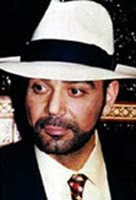
hotel where we meet.

But his incredible likeness to Saddam Hussein's sadistic son

Uday means he will always get attention.

Yahia went to the same Baghdad school as the dictator's son and

was regularly teased because he bore such a strong facial similarity to Uday.

Years later he was summoned to meet the Iraqi President and

informed that a great honour was to be bestowed upon him,

he was to become Uday's double - whether he liked it or not.

To make his appearance faultless, he claims Saddam forced him to undergo plastic surgery and then have coaching in how to imitate Uday.

If he didn't agree to it, his family would be harmed.

Yahia went on to spend four and a half years living a bizarre life of luxury, interspersed with assassination attempts by Shiite militia and occasional beatings from Uday.

He fled Iraq in 1991 after the first US-led invasion, made his way to Kurdistan and eventually ended up in Austria. For the past decade he has lived in Ireland where he has an Irish partner and three Irish-born children.

"I just want to live a peaceful life and put the past behind me, but the Irish government won't grant me citizenship," Yahia told Sky News.

"When I saw Uday and Qusay (Saddam's other son) dead on the TV news in 2003 I smashed the screen I was so angry, they had cheated justice. I wanted them to pay for all they had done. Now I'm paying a price too."

Yahia has now written a book about his experiences and while it may read like a best-selling work of fiction, he inisists it is all true.

"Writing has helped me but in some ways I don't think I will ever be able to shake off the shadow of Uday and his family," he said."


11 November 2009

"The Devil's Double"
Lee Tamahori

Lee Tamahori arrived in Hollywood having helmed "Once Were Warriors"
and then wasted his talents on films like "xXx: State Of The Union" and "Next." Well his next film, about the late Uday Hussein's body double, actually sounds pretty interesting. Titled "The Devil's Double" it's based on the true story of Latif Yahia, a dead ringer for Uday, who was forced against his will stand in for the hated, crazed and sadistic son of Saddam in potentially dangerous situations. As a result, he got a first hand look inside the wild world of the Husseins and went on to publish three books about his experiences, two of which - I Was Saddam’s Son and The Devil’s Double - will serve as the foundation of the film. The picture will begin shooting in January in Malta, and Dominic Cooper is the first confirmed cast member, while Ludivine Sagnier is currently circling the project.

13 September 2009

"I was Saddam's Son" was my first book, I wrote it in 1992. It was stolen by Arcade publishing, in America. The publishers changed a lot of the content to suit the agenda of the American Government and the CIA. Unfortunately, my book was used to support the propaganda of the Administration for the invasion of Iraq in 2003.
Best regards,
Dr.Latif Yahia.

16 June 2009

Top CIA officials openly admit, Al-qaeda is a total and complete fabrication


BBC’s killer documentary called “The Power of Nightmares“. Top CIA officials openly admit, Al-qaeda is a total and complete fabrication, never having existed at any time. The Bush administration needed a reason that complied with the Laws so they could go after “the bad guy of their choice” namely laws that had been set in place to protect us from mobs and “criminal organizations” such as the Mafia. They paid Jamal al Fadl, hundreds of thousands of dollars to back the U.S. Government’s story of Al-qaeda, a “group” or criminal organization they could “legally” go after. This video documentary is off the hook…

I have been trying to tell the media since the first time that Al-qaeda was ever mentioned anywhere that Al-qaeda was a figment of the American administrations imagination, a tool to rule the masses and get their backing for the administrations war on the world.

Al-qaeda was a double edged sword for the American administration, it firstly drew out any anti-American activists by giving them a sense of belonging, belonging to a group or cell of like minded people, people controlled by the administration, it also gave the administration the freedom to raise the fear levels in the population to fever pitch so that their war machine could to go to work, for if America cannot sell it’s arms, the major corporations cease to exist and therefore so does The United States itself.
In the run up to the next Presidential Election we see Presidential hopefuls vie for the chance to represent their parties, but what we don’t see or sometimes don’t understand is that no matter what candidate actually makes it to the Whitehouse the foreign policy will never change radically, the Faces change but the policies stay the same.
America has been at war with one country or another for 52 years, when it enters a country it never fully leaves, it always keeps a foothold.
1945-1946 China
1950-1953 Korea/China
1954- Guatemala
1958 Indonesia
1959-1961 Cuba
1960 Guatemala
1964 Congo
1965 Peru
1964-1973 Laos
1961-1973 Vietnam
1969-1970 Cambodia
1967-1969 Guatemala
1983 Grenada
1983-1994 Lebanon
1980s El Salvador
1980s Nicaragua
1986 Libya
1987 Iran
1989 Panama
1991 Iraq
1993 Somalia
1998 Sudan
1998 Afghanistan
1999 Yugoslavia
2001-? Afghanistan
2003-? Iraq
It may be argued that as the last remaining superpower America has the responsibility to intervene in situations that occur in the world or help when asked by Sovereign Nations, but what we have seen in the recent past is that the American Administration has ignored the UN and done it’s own thing, what is there to stop the American administration from doing anything that it chooses? Who can stand up to them?
In recent times the world has come to know the horror that is extraordinary rendition, we have learned about covert CIA prisons around the world, for me it was old news, in 1994 when I had fled from Iraq and was living in Austria, I was approached by the CIA, they wanted me to work for them to spy on my fellow countrymen, I was against the Iraqi regime but I had no intention of putting my fellow Iraqis in any more harm than they were already in. I refused to work for them and found myself in a six foot by five foot cell in solitary confinement in a Covert CIA prison in Austria a democratic country or supposedly so. Ten and a half months I spent in that cell with no contact from the outside world, I was badly tortured not for information but because I wouldn’t succumb, eventually I was released, it was a break in the chain of command, a new prison officer had been put on my floor but had not been given the instruction that no-one was to know that I was there, he inadvertently let a visiting Judge into my cell and my release was sealed then and there, the Judge could find no record of me, my supposed crime or length of detainment and on foot of this he ordered my release immediately. He was so concerned that I leave the prison that he brought me to Vienna himself in search of my family.
When my two books “I was Saddam’s Son” and “The Devil’s Double” were released they were used as propaganda for the American administration, I had written them to make the world aware of the situation in Iraq, not to be used as an excuse to invade, occupy and make life even tougher than it had already been for the Iraqis, you may argue that Iraq now has a democratically elected government, but at what human cost 1.4 million Iraqis have died,5 million are displaced inside and outside Iraq something that never happened during Saddam Hussein’s 35 year dictatorship , five years along Iraqis still have no proper sanitation, electricity is sporadic and unemployment is high, the New government lives in “The Green zone” and is terrified to leave it for fear of asasination attempts, billions of dollars have been stolen by former Ministers in the Interim government and Iraqi gangs. Kidnapping and extortion is the new commerce, daily, civilians are killed by roadside/suicide bombs and militias rule the streets, Whole areas are walled in with special identity cards maybe they should be made to wear yellow crescents?
Will the American army ever leave Iraq? well 50+ years after WW II they still haven’t fully left Germany or Japan.
To prepare for the future we must learn from the past, so why is it we keep repeating it?

In November 2006 I released my last book “The Black Hole” it recounted my experiences in Europe since fleeing Iraq, most people think that since I left Iraq my life has been a bed of Roses,I have several European citizenships under my belt and I am a multi-millionaire. If it were so I would indeed be a happy man, but unfortunately it is not. Having lived in Europe for the past 17 years 11 of which I have spent in Ireland, I am still stateless, the CIA have made many promises to me, namely that if I do not co-operate I will spend the rest of my life without a country, they have kept this promise. I am happily married to an Irish woman we have Irish children and I am on my third application for Naturalization as an Irish citizen. I am not a multi-millionaire and my royalties from “The Black Hole” go to charity, unfortunately the charity is not doing as well as it could because my book has been banned in Ireland and America, you will not find it in any bookshop, fortunately for me there are virtual bookshops like Amazon or my publisher’s website www.arcanum-publishing.com where it is available.
Is it not surprising to you that this book should be blacked out in this way, if I had continued to write against Iraq or Saddam I guarantee it would be in every major bookshop on the bestseller shelf like the first two, but because it goes against the “agenda” and talks openly about my experiences in Democratic European countries with the CIA and how they have and still are affecting my life, it is on the banned list.
I do not write about myself because I feel important or that I am some sort of celebrity, I write about my life because the world needs to know what can happen to an ordinary person in an extraordinary situation.
In recent times I have had emails, websites, blogs, youtube etc all closed and deleted without warning or explanation, I had nothing of a terrorist or violent nature on these sites and yet someone somewhere saw fit to shut me down, how is it that Al-Qaeda can have it’s own website showing people being beheaded, murdered etc and not be shut down if it is not affiliated to some power or government, how is it that we hear nothing from Bin Laden until the day before an election or some poll/bill that GW Bush needs to win and lo and Behold there he is threatening this that or the other, I put it to you that Bin Laden doesn’t live in some cave in the Tora Bora mountains he lives two doors down on Pennsylvania Ave so his buddy GW can get him to the studios everytime his ratings plummet.
On the day that G W Bush once again refused to sign into policy that the CIA cannot use torture as a method of information gathering, I say to you that that is all they know. In my life I have met many Intelligence agencies and in my opinion the CIA are the most inexperienced and unintelligent of them all.
Best regards to you all and work for Peace!

Latif Yahia.


27 May 2009

Abu Dhabi

The bizarre double life of Latif Yahia

Michael Theodoulou, Foreign Correspondent

  • Last Updated: May 27. 2009 11:07AM UAE / May 27. 2009 7:07AM GMT

LARNACA, CYPRUS // Latif Yahia escaped from Saddam Hussein’s Iraq nearly two decades ago, but has yet to escape his past. It is a past so bizarre, lurid and unique that some have questioned Mr Yahia’s story – that for several years he was forced to play the body double of Uday Hussein, the late Iraqi dictator’s psychopathic and depraved elder son.

“The problem is people think because I was the double of Uday, that I’m a bull******* like him,” says Mr Yahia, puffing on a Marlboro at his Babylonian Arabic cafe near the seafront in Larnaca, a placid tourist town in Cyprus.

For nearly two decades he has sought in vain for a home in the West for his family. His odyssey across Europe included periods in Austria, Holland, Norway, Germany, Britain and in Ireland, where he lived for 12 years.

Since August, he has been in Cyprus with his Irish wife, their two children and his mother, Bahar. No refuge has worked out. He is once more desperate to move on, but claims a vengeful CIA is thwarting his every attempt to secure a normal life anywhere for his family because he refused to co-operate with the US intelligence agency.

He says the CIA wanted him to head the Iraqi National Congress (INC), a US-backed umbrella organisation of mostly exiled opposition groups created in 1992 to foment the overthrow of Saddam Hussein’s regime. Yahia refused, despite, he says, being offered a blank cheque for his services. “I didn’t want to be a traitor.”

It was only then, he claims, that the INC job was given to Ahmed Chalabi, a controversial figure who went on to head the opposition group for many years.

Then, before the 2003 US-led invasion of Iraq, Mr Yahia says the CIA asked him to pretend to be Uday in a video to be released once hostilities began. In the video, he says, he was to urge the Iraqi army “to surrender and let the Americans come in”. Again he refused: “I wasn’t a traitor and I didn’t trust the CIA.”

Bitterly, he savours another irony: “For Saddam Hussein’s regime I was a traitor and for this regime [the current Iraqi government] I’m a collaborator, especially when they see I was against the war [the 2003 US-led invasion of Iraq].”

The mostly Cypriot customers and occasional British tourist at his cafe have no idea who he is. But any Iraqi popping in would do a double take. Mr Yahia, 45, still bears an uncanny resemblance to the late Uday: he has a close-cropped helmet of black hair, a goatee, thick eyebrows, full lips and a bulging nose.

His account of his 4½ years as the would-be bullet-catcher for Uday is documented in two books, I Was Saddam’s Son, published in 1994, and The Devil’s Double, in 2003. A feature film combining the two, titled The Devil’s Double, is in the works, directed by Lee Tamahori of Once Were Warriors fame and Die Another Day, the 20th Bond movie.

Mr Yahia’s memoirs portray the clan surrounding the Iraqi leader in his Macbeth-like court as a gang of sadistic, bloodthirsty killers with Uday at the front of the pack, raping and pillaging with impunity.

When Mr Yahia’s second book was published six years ago some opponents of the US-led invasion of Iraq dismissed it as opportunistic propaganda against Saddam. But the horrors uncovered in Iraq after the dictator’s fall provided compelling evidence of the astonishing cruelty of Saddam’s regime and the depredations Mr Yahia had so graphically catalogued. Mass graves and torture chambers were found, as was Uday’s extensive collection of pornography.

Even those who question Mr Yahia’s credibility acknowledge no tale of Uday’s cruelty and depravity is implausible. To most Iraqis, he was evil incarnate, more feared and loathed than his father.

Mr Yahia’s account begins during the 1980-88 war with Iran, when he served as an officer in the Iraqi army. The scion of a wealthy family, Mr Yahia had attended an elite Baghdad school with Uday, where he was teased about his remarkable likeness to the dictator’s unruly son. In 1987 Uday asked him if he would play his “fiday”, an Arabic word for double that also implies the role of a deputy and bodyguard. Mr Yahia at first resisted, but after Uday locked him in a tiny cell, daubed entirely in red paint, and made “vile threats” against his family, Mr Yahia says he succumbed.

An intensive training period began. Mr Yahia was subjected to dental surgery to recreate Uday’s “chimpanzee” grin and lisp: work that he says he has since reversed. He watched countless hours of videos of Uday to learn how to mimic his master’s mannerisms, from the way he held his fat Cuban cigar to his one-handed driving style.

To desensitise him to the regime’s brutality, Mr Yahia says he also had to watch tapes of Uday and his security forces torturing dissidents and personal enemies to death.

The job came with a lifestyle of expensive cars, fine clothes and access to the clannish corridors of power in Baghdad, although Mr Yahia says none of this was an attraction: he came from a wealthy family anyway. The drawbacks, however, were unimaginably bad. Effectively he was a prisoner in a gilded cage. As Uday’s fiday, he says, he survived 11 assassination attempts by people who mistook him for Saddam’s elder son. There are deep scars on Mr Yahia’s right hand, the result, he says, of one of the most serious attempts.

After fleeing Iraq, he adds, Saddam’s regime made four more attempts on his life in European countries. Despite his special role, Mr Yahia also found himself victim of Uday’s unpredictable rages and was beaten on whim.

Although he says he was forced to watch as Uday brutalised fellow Iraqis, Mr Yahia says he never took part in rape or murder and was never even a member of Saddam’s ruling Baath Party. “One time he [Uday] asked me to kill someone and I refused and tried to kill myself,” Mr Yahia says, showing scars on both his wrists where he says he had slashed himself.

He felt “horrible” being Uday’s fiday but not guilty because he was forced into the role. “It wasn’t a job you applied for,” he says drily. “I didn’t choose my past, I was forced.”

But he does feel “selfish” that he never used the gun he always carried to “put a bullet in his [Uday’s] head and stop the horrible things he was doing”. Mr Yahia says his trigger finger was stayed by the knowledge that all of his family would have been killed by the regime in revenge.

In November 1991 he finally fled Uday’s clutches, speeding in his Mercedes-Benz to Kurdish-controlled northern Iraq. In March 1992 a US helicopter whisked him across the border into Turkey, he says.

The CIA helped him escape Iraq in return for his agreement to help the agency, he says. “I said anything to get out.” Once safe, he told the CIA: “I am against Saddam but not Iraq … I didn’t want to be a traitor.”

Mr Yahia is personable, engaging, larger than life, clearly bright and well educated. But it is hardly surprising that he has enemies. He makes startling accusations against powerful people and institutions. These range from the CIA, which, he claims, together with Austrian intelligence, tortured him for nearly a year in a secret cell near Vienna because he refused to co-operate with them – an episode detailed in a third book, The Black Hole, published in 2006 – to the current Iraqi government whose members he brands as “pimps, criminals and traitors”. They are, he insists, “worse than Saddam … these [US-backed] puppets in Iraq have done to Iraq what Saddam failed to do in 35 years.”

The US-led invasion and its aftermath, he argues, killed 1.5 million people and led a further five million to flee their homeland. George W Bush, the former US president, and Tony Blair, the former British prime minister, he says, “are the murderers of the Iraqi people and should be brought to justice”.

Mr Yahia says 145 members of his extended family were killed in a US air raid as they made their way to the northern Iraqi city of Mosul for a funeral in mid-2006. The incinerated bodies were “crispy” and unidentifiable. “I think this is what they call the liberation of Iraq,” he says, with bitter sarcasm.

If Mr Yahia seems conspiracy-minded or paranoid it is hardly surprising, given his account of his extraordinary experiences. Perhaps his most intriguing claim to The National was that the inflammatory unofficial video footage of Saddam’s hanging in December 2003 was taken by a senior Iraqi government official.

Mr Yahia alleges that within hours of the execution the official sent him the footage in a taunting e-mail that said: “Ha, ha, ha, look what they’ve done to your father! You’ll be next.”

He claims that he promptly forwarded the e-mail and video footage to contacts at Al Jazeera, Reuters and the Associated Press. A senior editor at Al Jazeera television denied that anyone had sent them the unofficial execution footage. “We picked it up from the internet. It wasn’t an exclusive.”

Official Iraqi accounts had portrayed the execution as a well-organised affair and Saddam as a weak, broken man as he faced the gallows. To the embarrassment of the Iraqi government, the video footage showed a chaotic event, as witnesses mocked a dignified-looking Saddam with sectarian taunts while a noose was put around his neck.

Mr Yahia’s equally personable wife, Karen, fully supports her husband’s claim about receiving the e-mail, saying she was in his office at their home in Ireland when it arrived. They were keeping an all-night vigil for more news after reports emerged that Saddam’s execution was imminent.

Mr Yahia says Saddam “faced death like a lion”. As Uday’s reluctant double, Mr Yahia says he met Saddam frequently. Asked if he liked the ousted dictator, he shrugs, lights another Marlboro – he smokes four packets a day – and says: “I don’t deny that.” He insists, however, he was never a “Saddamist”.

The Iraqi dictator, unlike Uday, had been decent to him. “I never saw Saddam kill anyone or give the order to do so. He was always calm and smiling, always quietly spoken,” Mr Yahia says. Nor, he argues, was the Iraqi dictator informed of the full extent of Uday’s excesses as a serial rapist and killer. But once, “after Uday did a lot of terrible things, he [Saddam] said to me, ‘I wish you were my real son’. I said to him: ‘I am your son’.”

Mr Yahia says he has mementos given him by Saddam stored in a bank safety deposit box, among them a gold and platinum watch bearing the toppled dictator’s face and a pen he says Saddam used to sign off on the invasion of Kuwait in 1990.

For Uday, however, Mr Yahia feels only revulsion and hatred. “If I saw him in hell, I’d kill him.” Uday, he says, ruined his life and had his father poisoned in 1995.

When the first bulletins broke in mid-2003 that Uday had been killed by US forces in Mosul, Mr Yahia shattered his plasma television screen with a coffee cup hurled in anger. “I didn’t want him to be killed. I wanted him to face justice.”

Uday, he insists, was a coward, unlike his younger brother, Qusay, “a professional fighter” who was killed in the same siege by 200 soldiers in their Mosul hiding place.

Mr Yahia does not pause for a second when asked what the worst thing was that he had witnessed Uday do. He tells of a grotesque episode in Al Habaniya, Iraq’s leading honeymoon resort, when Uday noticed a newlywed couple walking hand in hand and called over to them. Uday was livid when they ignored him. Mr Yahia attempted to persuade Uday to leave the couple alone, pointing out that they had only been married a few days. Uday snapped back: “This isn’t your business!”

Uday’s “pimps” beat up the husband and forced the beautiful bride to his suite, where he raped her. In shame and despair, she later threw herself to her death from the fourth-floor window of the building.

Mr Yahia says the husband was accused of trying to kill Uday and sentenced to death but was later spared because of his long service in the war against Iran for which he was awarded medals. The man, Yahia claims, was one of those who nearly killed Uday in a 1996 assassination attempt and now lives in Holland.

For five years after his escape from Saddam’s Iraq in 1991, Mr Yahia could see the ghost of Uday simply by looking in the mirror. “Before that I was thinking like him,” he says.

Today, he is no longer haunted by Saddam’s first born. Mr Yahia is back to what he was in 1987, before his fiday nightmare began, although he feels the West has shattered his dreams of leading a normal life.

Despite being married to a citizen of the EU, he remains stateless, equipped only with a temporary Irish travel document. He was stripped of his Iraqi citizenship, he says, because he left Iraq illegally – without his passport or permission – and has never been back.

Today, with Saddam gone, he could return to Iraq, claiming scornfully that he could buy back his citizenship for a few hundred dollars. “But I don’t want to be a citizen of a corrupt country … I don’t want to be an Iraqi any more.”

Mr Yahia is keen to get a message out to any country that considers itself a democracy.

“I want a country called home for me and my family, somewhere I can say ‘here is my country’.

“If I knew the West would treat me like this, I’d [have preferred] a bullet from Saddam Hussein’s government … Every day I suffer and every day I feel dead.”

He is very bitter that Ireland, which allowed him residency rights, refused him citizenship even though he had lived there for 12 years and has an Irish wife. He told an Irish reporter two years ago that his naturalisation application had been rejected because of a baseless claim, passed on by the CIA, that he was an international arms dealer.

“Ireland is not a state of Europe; it’s a state of America,” he says.

Mr Yahia had high hopes of finding a new home in Cyprus, which he entered legally on his temporary Irish travel document. He was relieved to leave behind the incessant rain of Ireland for a sunny country on the doorstep of the Middle East but which is part of the European Union.

The experience soon soured. He invested €172,000 in his cafe, but says numerous attempts to have it licensed have failed. He also had problems with the authorities when his brother, Omid, entered Cyprus illegally in December to seek asylum. Mr Yahia was accused of assisting his entry, which he vehemently denies.

Now Mr Yahia cannot wait to leave Cyprus. Adding to his worries, he says he was recently diagnosed with multiple sclerosis.

To escape his past Mr Yahia says he needs a country that looks “at me as a human being, not as Uday’s double”.

When he looks in the mirror today, he says: “I see Latif Yahia, the fighter”.

mtheodoulou@thenational.ae