Pages

Showing posts with label Saddam Hussein. Show all posts

08 April 2012

Robbed and ruined by a British court on the orders of the CIA... and we couldn't tell a soul: The chilling story of how secret justice cost a couple their £5m home - and £700m business


 By David Rose
|

Silent ordeal: Margaret Bentham and her husband Stuart lost their £5m home
Despite the years of cruel reality, Margaret Bentham still seemed incredulous as she told her story, a story she once thought she could never share.
But with quiet dignity she summed up the ordeal she and her businessman husband Stuart, a former British Army officer, have endured at the hands of the CIA.
‘We were robbed of a business worth millions,’ she said. ‘We were plunged into financial ruin. But the worst thing was, not only were we deprived of justice, we couldn’t tell a soul.’
In an exclusive interview, Mrs Bentham told The Mail on Sunday how the CIA decided a civil court case about the Afghan mobile phone company he had helped to establish was too ‘sensitive’ to air in public.
It used draconian legal powers to shut down the case – so destroying not only the Benthams’ livelihood, but any prospect of redress after Mr Bentham alleged the company had been stolen from him.
‘We lost our £5 million flat in Belgravia,’ said Mrs Bentham, 50. ‘We’d had a thriving telecoms business in London employing 23 people, and we lost that too.
The gagging order imposed by a US court meant I couldn’t even tell our friends what was wrong or Stuart could have gone to prison. It was  absolutely Kafkaesque.’ Even now, Mr Bentham could be extradited and jailed if he gave an interview.
The Benthams’ nightmare was made possible by a US legal procedure known as the State Secrets Privilege.
But as Tory MP David Davis disclosed last month when he set out the Benthams’ story in the Commons, an alarmingly similar system will soon exist in Britain, if the Coalition’s  current Green Paper on Justice and Security becomes law.
The public part of the court judgment that destroyed Mr Bentham’s fortune is two words long: ‘Case dismissed.’ The reasons remain secret, while he is subject to an indefinite legal gag.
Such secret judgments have never been permitted in Britain. Under the Green Paper, they would become routine.
Last week, comments by Deputy Prime Minister Nick Clegg and a joint letter to MPs by Home Secretary Theresa May and Justice Secretary Ken Clarke together suggested that the Government is preparing a partial U-turn on the proposals.
In an apparent concession to critics, it may water down plans for secret inquests, and restrict secret hearings to a ‘tiny number’ involving national security. Unfortunately, that is exactly the category responsible for the Benthams’ ordeal.
‘The security services are still feeding Government Ministers with misleading claims to justify abhorrent and unjust proposals,’ Mr Davis said yesterday. ‘They are still seeking to bolster their collapsing argument  for undermining centuries of British judicial rights.’

Partners: Mr Bentham, left, Mr Bayat, centre, and Lord Michael, far right in Taliban-ruled Kabul in 1998
Even if the Green Paper is changed in the way suggested last week, he added, its proposed closed hearings, secret evidence and vetted ‘special advocates’ would allow security agencies to cover up incompetence and embarrassment by citing national security.

As Mr Davis revealed in the Commons, that is exactly what happened with the Benthams. In their case, the embarrassment could hardly have been greater: what the use of the State Secrets Privilege did was to conceal evidence of a massive CIA failure that stymied a real possibility of preventing the 9/11 attacks.

The background to the alleged fraud against Mr Bentham, 63, and his business partner Lord Michael Cecil, 52, a brother of the Marquess of Salisbury, goes back to 1998, when they went into business with Ehsanollah Bayat.
Mr Davis described him in the Commons as ‘a Kabul-born American citizen on friendly terms with the highest echelons of the Taliban government and particularly its leader, Mullah Omar’.

Mr Bayat had the connections to acquire the licence to build Afghanistan’s first mobile phone, internet and international call system – Mr Bentham and Lord Michael the business expertise.
But, as Mr Davis said, Mr Bayat had a secret: he was an informant for the FBI, the main US domestic counter- terrorism force. The link made an opening for Operation Foxden, a scheme the FBI planned to run jointly with the National Security Agency (NSA), the US electronic eavesdropping organisation.
The NSA offered $30 million and technical assistance, said Mr Davis. The plan was to build extra circuits into all the equipment installed, enabling the US to ‘record or listen live to every single landline and mobile phone call in Afghanistan’ and ‘monitor the telephone gateways channelling international calls in and out of the country – gateways already being used by Bin Laden, Mullah Omar and their associates, thanks to the satellite phones given by Mr Bayat to Taliban ministers as gifts’.

By the beginning of 2000, after all the main partners had made several visits to Afghanistan, the project was at an advanced stage, and could have been fully functional within months – 18 months or more before 9/11.

Osama bin Laden
Recently, Mr Bayat has claimed he never had connections with US security agencies or the pre-9/11 Taliban government. But Mrs Bentham said that in the Nineties he seemed to make no secret of such links.

‘I remember one time when we flew in to Newark, New Jersey, and Bayat met us off the plane,’ she said. ‘He was with two FBI agents. We went to their office. Then they took me to the station so I could go shopping in New York while they had their meeting.’

But just as the project seemed to be on the brink of coming to fruition, it was wrecked by what Mr Davis termed a ‘turf war’ between the FBI and NSA on one side, and the CIA, which wanted to control it.

The consequence, as the agencies bickered in Washington, was that nothing happened for 20 months. By the time these bureaucratic obstacles had been cleared, it was too late.

A meeting to get the scheme going again, attended by Mr Bentham and Lord Michael, took place in New York in a hotel overlooking the World Trade Centre on September 8, 2001 – three days before the attacks.

Mr Davis commented: ‘Of course, we cannot say for certain that if US intelligence agencies had managed to tap the Afghan phone network sooner, we would have intercepted evidence in time to stop the 9/11 attacks, but it seems quite likely.’

After 9/11, the Taliban were toppled by US-led forces. Very soon after that, Lord Michael, Mr Bentham and their colleagues, working with Mr Bayat’s company Telephone Systems International (TSI), installed the very network that had been planned two years earlier. The Britons ordered and paid for most of the equipment and ran the project out of London.

Once operational in April 2002,  the firm became a licence to print money and is now said to be worth about £700 million.
The Mail on Sunday has copies of official US documents, signed by Mr Bayat in May 2002, stating that Mr Bentham and Lord Michael each were entitled to 15 per cent of the shares: their holdings, in other words, should now each be worth more than £100 million.

Instead, said Mrs Bentham, she and her husband are in straitened circumstances, and live in a rented house, dependent for holidays on hospitable friends.
‘We were living  a very comfortable life. And then it changed completely. We had no idea what we were dealing with, and the terrifying thing is what happened to us could happen to anyone.’

Home Secretary Theresa May and Justice Secretary Ken Clarke together suggested that the Government is preparing a partial U-turn on the proposals to hold more trials in secret
In the autumn of 2002, having offered to buy out Mr Bentham and Lord Michael for a ‘derisory’ sum that did not even cover the cost of the equipment they bought, Mr Bayat sued them for ‘deceit and  conspiracy’, and, simultaneously, simply denied they had any legal entitlement to shares in TSI.
They had copious documentation, and, their lawyers believed, a cast-iron case. But as Mr Davis told MPs, this was no ordinary commercial squabble: ‘The US intelligence agencies feared the consequences if the truth about their infighting emerged and they were determined to stop that truth from emerging.’
First, they offered Bayat $1 million for his legal fight – part of a more general plan to exclude British citizens and British agencies from the ongoing phone intelligence operation. Then, when the Britons’ lawyers refused to back down, ‘CIA officers threatened them, warning the whole case would be shut down if they continued’.
Finally, in November 2004, came the use of the State Secrets Privilege. The effect was not only to close down the case immediately, but  to expunge all trace from court records.
Lord Michael and Mr Bentham were subject to a gagging order so severe that when they tried to reopen the case in London, they were forbidden on pain of contempt of court from discussing any aspect of the intelligence background with their own lawyers.
Although there were hearings in London, which the Britons lost for technical legal reasons, the British courts had little idea of what had actually happened. ‘The State Secrets Privilege meant that the US agencies were restricting what could be said in court in England,’ Mrs Bentham said.
‘I couldn’t speak to friends, and I felt pretty sure our phone calls  and emails were being monitored. Meanwhile, legal fees meant we were facing a colossal drain on our cash. Imagine: you have to sell your home, but you can’t tell anyone why.
‘So we just stopped going out socially, because people would ask, “How are things?” and we couldn’t even begin to answer. It’s only now, after the parliamentary debate, that at last people know.’
The worst moment, she recalled, was when the State Secrets Privilege was deployed. ‘They showed the judge some kind of statement that we couldn’t see, and he shut down the case next day for reasons we weren’t allowed to read. And that’s the kind of thing that’s going to happen here if the Green Paper becomes law.’
Later, she said, the Benthams’ American lawyers asked a US judge whether their British lawyers could see the secret judgment and gagging order in strict confidentiality, so that at least they could advise them whether they should try to pursue the case in London. The judge refused. 
They also tried to get the State Secrets Privilege reversed in a  federal US appeals court. They lost again – and the appeal court’s 17-page decision is also strictly secret.
Mrs Bentham said: ‘The lesson is that the US legal system is perfectly willing to condone the theft of our assets. What gets me is that one of the main reasons the British Government has justified the Green Paper is to protect American secrets.’
At the end of the Commons debate, Foreign Office Minister Jeremy Browne gave the Benthams a glimmer of hope. He said the Prime Minister had been aware of their plight for months and would in due course respond to their representations.
Meanwhile, Mr Davis said the case highlighted a fundamental inequality between Britain and the US: that American agencies could apparently dictate what British citizens could talk about in British courts  – even the very use of the State Secrets Privilege which had enabled such secrecy in the first place.
‘It’s just not good enough to say that restricting the Green Paper proposals to national security cases will make them less obnoxious,’ Mr Davis said yesterday. ‘Once you let security trump the rule of law, injustice such as this is inevitable.’

17 February 2012

"Some People are alive ONLY because it's illegal to kill them."


15 February 2012

Nobel peace prize jury under investigation

STOCKHOLM, Sweden (AP) — Nobel Peace Prize officials were facing a formal inquiry over accusations they have drifted away from the prize's original selection criteria by choosing such winners as President Barack Obama, as the nomination deadline for the 2012 awards closed Wednesday.
The investigation comes after persistent complaints by a Norwegian peace researcher that the original purpose of the prize was to diminish the role of military power in international relations.
If the Stockholm County Administrative Board, which supervises foundations in Sweden's capital, finds that prize founder Alfred Nobel's will is not being honored, it has the authority to suspend award decisions going back three years — though that would be unlikely and unprecedented, said Mikael Wiman, a legal expert working for the county.
Obama won in 2009, Chinese dissident Liu Xiaobo won in 2010, and last year the award was split between Liberian President Ellen Johnson Sirleaf, Liberian activist Leymah Gbowee and Tawakkul Karman of Yemen.
For this year's award, Russian human rights activist Svetlana Gannushkina, jailed former Ukrainian Prime Minister Yulia Tymoshenko and Cuban rights activists Oswaldo Paya and Yoani Sanchez are among the candidates who have been publicly announced by those who nominated them.
The secretive prize committee doesn't discuss nominations — which have to be postmarked by Feb. 1 to be valid — but stresses that being nominated doesn't say anything about a candidate's chances.
Fredrik Heffermehl, a prominent researcher and critic of the selection process, told The Associated Press on Wednesday that "Nobel called it a prize for the champions of peace."
"And it's indisputable that he had in mind the peace movement, i.e. the active development of international law and institutions, a new global order where nations safely can drop national armaments," he said
Especially after World War II, the prize committee, which is appointed by the Norwegian Parliament, has widened the scope of the prize to include environmental, humanitarian and other efforts, he said.
For example, in 2007 the prize went to climate activist Al Gore and the U.N.'s panel on climate change, and in 2009 the committee cited Obama for "extraordinary efforts" to boost international diplomacy.
"Do you see Obama as a promoter of abolishing the military as a tool of international affairs?" Heffermehl asked rhetorically.
Nobel, a Swedish industrialist and inventor, gave only vague guidelines for the peace prize in his 1895 will, saying it should honor "work for fraternity between nations, for the abolition or reduction of standing armies and for the holding and promotion of peace congresses."
Nobel said the peace prize should be awarded by a Norwegian committee, and the other Nobel Prizes by committees in Sweden. The two Scandinavian nations were in a union at the time.
Geir Lundestad, the nonvoting secretary of the Norwegian Nobel Committee, dismissed Heffermehl's claims.
"Fighting climate change is definitely closely related to fraternity between nations. It even concerns the survival of some states," he told AP.
Still, the County Administrative Board decided to sent a letter to the Stockholm-based Nobel Foundation, which manages the prize assets, requesting a formal response to the allegations.
"We have no basis to suggest that they haven't managed it properly. But we want to investigate it," Wiman said.
"The prize committee must always adjust its rules to today's society," he said. "But peace work has to be at the core — it can't deviate too much from that," Wiman said.
The peace prize and the Nobel awards in chemistry, physics, medicine, literature and economics are always handed out Dec. 10, the anniversary of Alfred Nobel's death.

08 February 2012

RAF helicopter death revelation leads to secret Iraq detention camp.


Death in RAF helicopter and secret prison camp in Iraq desert raises questions about legality of British and US operations.
Latif Yahia,Iraq,USA,CIA,Uday Saddam Hussein,America,War
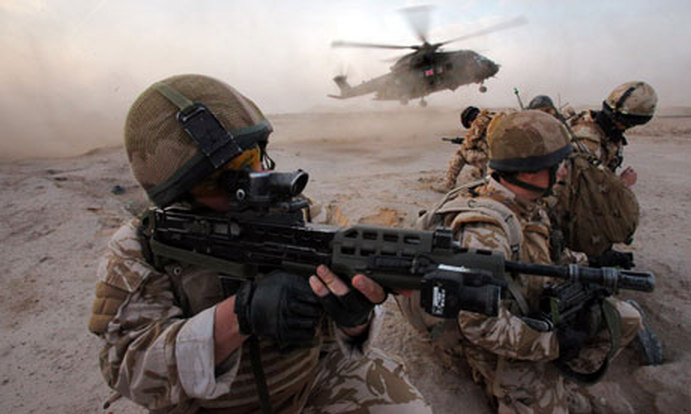
An RAF helicopter in Iraq.
On the evening of 11 April 2003, a pair of RAF CH47 Chinook helicopters swept over Iraq's western desert towards a remote rendezvous point beside Route 10, the highway that begins life on the outskirts of Baghdad before running for mile after mile towards the border with Jordan.

As they approached their destination, the crews assumed they were on an operation that would be uneventful. Two days earlier Saddam Hussein's statue had been toppled after American tanks rolled into the Iraqi capital; three weeks later George Bush would stand in front of a banner saying "mission accomplished".

The helicopter crews had been told that a number of detainees were under armed guard at the side of the highway. They were to pick them up after dark and take them to a prison camp. What followed was far from routine: before the night was out, one man had died on board one of the helicopters, allegedly beaten to death by RAF personnel.

The incident was immediately shrouded in secrecy. When the Guardian heard about it and began to ask questions, the Ministry of Defence responded with an extraordinary degree of obstruction and obfuscation, evading questions not just for days but for weeks and months. The RAF's own police examined the death in an investigation codenamed Operation Raker, but this ended with some of the most salient facts remaining deeply buried. The alleged culprits faced no charges.

Asked where the men were being taken, the MoD had initially indicated that they were en route to a prisoner of war camp, one inspected regularly by the Red Cross.

Later it became clear that this was not correct: they were being transported to an altogether more secret location. The truth about the mission raises some searching questions about the legality of some of the British forces' operations carried out in close co-operation with US allies.

One of the first hints that something untoward had happened aboard one of the RAF Chinooks came six years later when Lieutenant Colonel Nicholas Mercer was giving evidence at the public inquiry into the death of Baha Mousa, the hotel receptionist tortured to death by British troops in September that year.

Mercer, who had been the British army's most senior lawyer in Iraq, told the inquiry that by the time of Mousa's death, several other people had died in UK military custody.

Asked about these mysterious deaths, the Ministry of Defence named one of the deceased as Tanik Mahmud, and said he had "sustained a fatal injury" while travelling aboard an RAF Chinook. Perplexingly, the ministry added that the cause of his death remained unknown.

'Unlawful killing'Asked how they could be sure he had suffered a fatal injury when the cause of his death was not known, the MoD took five weeks to answer.

Eventually, officials admitted that the RAF had received a complaint – anonymously, they said – that "three RAF Regiment personnel on board the helicopter had kicked, punched or otherwise assaulted Mr Mahmud leading to unlawful killing".

This raised many other questions, which the MoD appeared sometimes reluctant to answer.

One of the few that it answered promptly – within hours – concerned the location to which the prisoners were being taken. They were going to Umm Qasr, the MoD said: this was the town on the Kuwaiti border where British and American forces had constructed a large prisoner-of-war camp, a place that came under the supervision of military lawyers and was inspected regularly by the Red Cross.

More information about the incident was to be found in a number of documents released in Australia under that country's freedom of information laws.

The deceased had been one of 64 men detained at a roadblock set up by a soldiers of the Australian SAS. Working alongside a solitary member of a US airforce unit, the 20 Australians were attempting to capture so-called "high-value targets", former high-ranking members of the deposed regime attempting to flee the country.

Seven days earlier, Saddam had appeared suddenly in the middle of a crowd of cheering supporters, an event that was filmed and broadcast on Iraqi TV, along with a speech he was said to have made in which he exhorted his countrymen to "fight them brothers, hit them day and night". The coalition forces were determined to find him.

Three of the prisoners at the side of the highway were suspected of being officials of Saddam's ruling Ba'ath party. Four were held because they were Iranians and in possession of an enormous sum of cash – more than $600,000 – and a letter offering a bounty for each American killed.

The remainder of the prisoners appear to have fallen under suspicion because they were travelling together on a coach. Some were Iraqis and others were Syrian, and all were to be interrogated about Saddam.

None of the 64 were armed, however, and none were in uniform. A number were middle-aged and at least one was severely disabled. Despite this, the men were to be detained as EPWs, enemy prisoners of war. They were to be loaded into the Chinooks in groups of eight and ferried to the prison camp.

As a result of what might be described as a legal sleight of hand, the men were never recorded as prisoners of the 20 Australians. On paper, at least, the lone American was said to have captured them. This meant that the Australian government could consider itself not to be bound by a Geneva convention clause that obliged it to demand the return of any prisoner it transferred to the US if it became apparent that US forces were not treating them in accordance with the convention.

At this point in the Guardian's inquiries, a report written by the squadron leader commanding the 2nd squadron of the RAF Regiment was leaked.

This document, prepared as part of a brief US field inquiry into the incident, showed that the Australians had bound the prisoners' thumbs together before handing them over.

The RAF Regiment gunners then placed hessian bags over the prisoners' heads as they were being led aboard the Chinooks, despite a ban on hooding imposed on the UK's armed forces more than four decades earlier.

Knelt uponEach prisoner was forced to lie face down on the floor of the aircraft, and those who "refused to adopt the required position" were forced to the floor and knelt upon.

One man who slipped out of his thumb restraint and flailed his arms around was said to have been "lowered" to the floor and "subdued".

By the time the helicopters had reached their destination, two of the prisoners "were found to be unresponsive", according to the squadron leader, while "there was some commotion at the front of the aircraft" because a third prisoner, a disabled man, had somehow parted company with both his prosthetic legs.

It was a windy night, the sand was being whipped up by the Chinooks' rotor blades, and visibility was down to 1.5 metres. The American troops who received the prisoners say the British appeared to be rushing, anxious to transport them all before dawn.

The two "unresponsive" men were loaded into the back of a Humvee vehicle, face down and on top of each other, while the man with no legs was placed in the front passenger seat.

All three were driven to a "holding facility", where one was declared dead. The bag had been taped so securely over his head that it needed to be cut off.

The US inquiry concluded that "appropriate" methods had been used to subdue the man who died. The RAF made no attempt to contact next of kin to inform them of his death, however. Were it not for the anonymous complaint, this would have been the end of the matter.

The complaint is understood to have been made by a member of the Chinook's crew, unhappy at what he saw happening in the helicopter's cabin as they were flying to the camp. After receiving the complaint, the RAF police moved slowly.

According to the MoD, they waited more than a year after the death before asking an RAF pathologist whether the body should be exhumed and examined. Asked to explain the delay, the MoD said the investigators "did not know Mr Mahmud's place of burial".

Once the location was disclosed by the US military, officials explained, "discussions took place on the feasibility of accessing Mr Mahmud's remains, taking into account serious security concerns and obtaining permission from the local imam". At this point, according to the MoD, the RAF pathologist "indicated that given the climate and the degree of decomposition since the death, it would be extremely difficult to establish cause of death". As a result, no postmortem examination was ever carried out.

This advice surprises one eminent civilian pathologist, who says that only exhumation could reveal the state of decomposition.

Derrick Pounder, professor of forensic medicine at the University of Dundee, who has experience of exhumations and postmortem examinations in the Middle East – including cases of deaths in custody – said: "That advice would be contrary to the advice that any UK forensic scientist would offer to any police in the UK who were investigating an allegation of assault leading to death."

He says an examination of the hard tissue may have revealed evidence of an assault before the prisoner died: ribs, for example, sometimes fracture in a distinctive manner when kicked. Asked whether a copy of the pathologist's advice would be made available, the MoD said no copy could be found in its files. After this advice was received the case was passed to RAF's prosecutors, who advised that there was insufficient evidence to bring any charges. They also concluded that any further investigation was pointless.

Asked why the men had been taken as EPWs, when none were armed and all were wearing civilian clothes, the MoD appeared to be stumped.

"UK forces did not detain these individuals, they transported them," the ministry said. "This is not a question we can answer. This question should be directed to the detaining country."

Eventually, the Guardianobtained a copy of the passport that had been in the dead man's pocket, and the death certificate that had been issued by the US military authorities. The passport showed the dead man was a Baghdad odd-job man aged 36. It also showed that his name was not Tanik Mahmud, but Tariq Sabri al-Fahdawi. The RAF police investigation appeared to have been so superficial that it had failed to establish the dead man's identity.

Unknown cause of deathThe certificate recorded Sabri's cause of death as unknown. It also showed that the whereabouts of his grave, far from being uncertain, could be pinpointed precisely. The American officer who completed the certificate had gone to considerable lengths to ensure it could be found, beyond the airfield perimeter: "700m out front gate to first culvert, 191 degrees for 50m, next to grave with stacked stones in same location ..."

But of greater significance was what the death certificate revealed about the location of the airfield. It showed that the 64 prisoners had not been flown to the prison camp at Umm Qasr at all. They had been taken an airfield codenamed H1, described on the certificate as the forward operating base of a US special forces unit known as Task Force-20. H1 was an airfield built next to an oil pipeline pumping station.

It was 350 miles north-west of Umm Qasr, in the middle of Iraq's western desert, a vast and desolate expanse of sand and scree. The nearest settlement was many miles away: it is difficult to see how there could have been a "local imam" whose permission needed to be sought before exhumation, or how anyone in the vicinity who could pose "serious security concerns".

The holding facility at H1 was not inspected by the Red Cross. Moreover, its existence was not disclosed to Lieutenant Colonel Mercer, the UK's most senior army lawyer in Iraq at the time. Mercer says he was "extremely surprised" to learn of its existence.

He said: "This matter potentially raises very serious questions. Strenuous efforts were made at all times to ensure that all prisoners were accorded the full protection of the Geneva conventions and vigorous objections would have been raised if there was the slightest possibility of a breach of the conventions. It appears from the information disclosed that some prisoner operations were being conducted, deliberately or otherwise, outside of the chain of command."

The holding facility appears effectively to have been a secret prison – a so-called black site. It is entirely possible, according to international law experts, that taking prisoners to H1 could amount to "unlawful deportation or transfer or unlawful confinement", and that the prisoners were subjected to "enforced disappearances", both of which are war crimes under the Rome statute of the international criminal court.

One former RAF Regiment trooper who was based at H1 for several months has described being involved in a number of similar missions in which prisoners were collected from coalition special forces. This always happened "under total darkness", he says. On arrival at H1, the prisoners were handed on to people whom he describes as "other authorities".

Could this explain why the police investigation into the alleged killing of Tariq Sabri ended with some of the most basic facts – such as his name and the the cause of his death – remaining unknown?

According one well-placed source with knowledge of Operation Raker, the RAF police investigation into the death, there were some at the MoD who were concerned about the possible consequences of a more thorough inquiry: people who were filled with dread at the thought that it could lead to accusations that British forces and others had been involved in crimes against humanity.

When the MoD realised that the location to which the prisoners were flown was known to the Guardian, it quickly apologised for previously stating that they had been flown to Umm Qasr. This had been an innocent mistake, one that a spokesman said could be attributed to "admin/human error".

At this point the MoD also released a copy of the US field inquiry report, which had been withheld from the Guardian for more than a year.

The report showed that a British special forces unit known as Task Force 14, and an Australian unit known as Task Force 64 were an integral part of operations at H1. Both units were under US tactical control.

The ministry also volunteered an admission that the investigation into Sabri's death was not conducted quickly enough. But it said that this could not happen today as its procedures had changed, and added that Operation Raker was now the subject of a review by a team of military police and former civilian detectives known as IHAT – the Iraq historic allegations team.

Asked whether there was any truth in the suggestion that officials had interfered with the investigation into Sabri's death in order to suppress information about the UK's involvement with H1, the MoD replied that IHAT was "giving consideration to any involvement with the investigation of MoD officials who were external to it", and that it would be "inappropriate to comment" while that review was continuing.

Geneva conventionThe MoD was also asked whether it was satisfied that UK forces serving at H1 had never been in breach of the Geneva convention, or any other international humanitarian law. It replied by stating only that IHAT would consider the actions of those who came into contact with Sabri.

Nor would the MoD comment on another claim made by the source with knowledge of Operation Raker: that both CIA and MI6 officers were involved in the interrogation of prisoners flown secretly to H1, and that these were the "other authorities" whom RAF Regiment troopers were told would be taking possession of their prisoners. The ministry's only response to questions about non-military interrogators at H1 was a terse: "No further information."

The involvement of the CIA in Task Force 20 is no secret in the US, where it has been disclosed in Pentagon statements and congressional testimony. According to Human Rights Watch, the inter-agency unit was responsible for "some of the most serious allegations of detainee abuse" following the invasion.

Before the end of that year, the unit merged with a similar unit previously based in Afghanistan and changed its name to Task Force 121. By then, however, some at the Pentagon were sufficiently concerned about its methods to send a special investigator to Iraq. Stuart Herrington, a retired military intelligence colonel, discovered that the unit was holding undeclared "ghost" detainees and operating a secret interrogation centre to conceal its activities. Some of its prisoners showed signs of having been beaten.

This was several months before the abuses at Abu Ghraib became known, and Herrington's top-secret report shocked some in Washington. Eventually, somebody leaked it.

Over the years that followed, the unit changed its name again, to Task Force 6-26, and later to Task Force 145, possibly in an attempt to confuse adversaries. Its precise size and the names of its commanders have never been disclosed. But its methods appear to have remained the same. The American Civil Liberties Union obtained a series of US defence documents that showed that the unit's personnel had been investigated repeatedly over their alleged involvement in a catalogue of abuses. In one case, taskforce interrogators were said to have forced a 73-year-old woman to crawl around a room while a man sat on her back, before forcing a broom handle into her anus. Two of her fingers were broken. The woman, a retired teacher, said her interrogators demanded to know the whereabouts of her son and husband, both of whom she said were dead.

In 2006, an investigation by the New York Timesfound that some taskforce prisoners had been water-boarded, and others were beaten or shot with paintball guns. While a number of interrogators had been prosecuted, posters around one of their bases proclaimed "no blood, no foul": they would be safe as long as none of their subjects bled. The ultimate destination for some of the prisoners who passed though this base was said to be Abu Ghraib. The newspaper's investigation did not uncover the continuing UK involvement with the taskforce, however.

But this became clear when one British member spoke out after quitting the army in disgust. Ben Griffin, a young SAS trooper, said the unit was capturing hundreds of people who were being rendered to prisons where they faced torture, and that he had witnessed dozens of illegal acts by US troops. "My commanding officer at the time expressed his concern to the whole squadron that we were becoming the secret police of Baghdad," Griffin said. The MoD responded by obtaining a court injunction to silence Griffin, and warned he faced jail if he said any more.

The review of Operation Raker being conducted by IHAT is nearing completion, and a report is expected to be handed to the head of the RAF police at the end of this month. The MoD says it is not going to be published.

06 February 2012

How the American administration and the CIA created terrorists and mass-murderers

National Security Advisor Zbigniew Brzezinski visited Afghanistan in 1979:
This is what he said to the Mujahideen in Afghanistan.
"We know of their deep belief in God, and we are confident their struggle will succeed. That land over there is yours, you’ll go back to it one day because your fight will prevail, and you’ll have your homes and your mosques back again. Because your cause is right and God is on your side"

Former British Foreign secretary, Robin Cook said:
"Bin Laden was, though, a product of a monumental miscalculation by western security agencies. Throughout the 80s he was armed by the CIA and funded by the Saudis to wage jihad against the Russian occupation of Afghanistan.'

Hilary Clinton admits that the American government created, supported and supplied the Mujahideen in Afghanistan in the 70's, these Mujahideen became Al-Qaeda, the Taliban and the Brotherhood of Islam. The very terrorists that they now fight in their "War on Terror".

Yes Mrs Clinton They created them and we pay the price.

Mr. Obama, President of the United States of America welcomes the mass murderer Noori Al-Maliki to the Whitehouse and says without shame that Iraq is a safe, independent, sovereign state in which Al-Maliki is a Democratically elected leader.
Yes Mr. Obama, in Al-Maliki's democratic Iraq there are 138,000 in prison and an unknown amount in secret prisons, seven of which have been discovered recently. During the dictator Saddam Hussein's reign we had 14,800 prisoners -this information was found after the 2003 invasion-
Half of the number of prisoners held under Al-Maliki's democratic government have not been afforded legal aid, a court hearing or visitation by family members, in fact once they are handcuffed and removed from the family home or wherever they are arrested ,no other news is ever passed on the family of their whereabouts or legal standing. Under this "Democratic Government" that America supports, Iraq has no electricity, no clean water, no infrastructure, no justice and no human rights. Presently there are 3 million Iraqi refugees inside Iraq -mostly since the civil war from 2006 until now- something that is not reported in the western media as it would be evidence of Americas failure. 5 million Iraqi refugees outside of Iraq and over 1.5 million killed. There are 1 million widows.
A special thanks also to you Mr. President, for your presentation of Iraq as a gift to Iran on a golden plate.
The irony of the situation is that when America chooses to go to war with another country it uses "Human Rights violations" as it's first tool in the propaganda machine. Where are the Human rights in Iraq now?

A special thanks from me to your CIA, well done and thank you for having me put on the "terrorist watch list" in Ireland, it only goes to back-up my belief that if you are honest, speak out for your people and country, have a manner or dignity, you are a terrorist in the eyes of American foreign policy.  We all know that Ireland -the state not the people- will always believe what you tell it to, it is a state of America not Europe, and even if it were to try some independent thought you would keep it in line by threatening to send all the Irish illegal immigrants home, just like your predecessor Mr. Bush did when the Irish government didn't want to open Shannon airport to the US Military or rendition flights. If having dignity and manner, speaking out for my country, it's people, justice and human rights around the world makes me a "terrorist" in your eyes, well then sir, I will wear that title proudly.

31 January 2012

Big Brother Internet.


Do you remember the Safe-Cyber instructions they taught you in the mandatory Computer Ed class (operated by the National Institute of Standards and Technology)? First you fire up your Secured Computing Device (SCD) and its hardware token authenticator.
Then you enter the six-digit algorithmically generated password displayed (a new one flashes every 60 seconds) and are asked to supply your biometric identifier. You place your thumb on the built-in fingerprint pad, click, and wait for the Internet connection to begin. But it doesn’t.
Instead, the screen goes black for a second before the dreaded words appear: “Malware has been detected on this SCD. As mandated by federal law, it has been placed in quarantine.” Then the machine shuts down.
This is not just conjecture, but an imminent scenario. Policies, such as the White House proposed “National Strategy for Trusted Identities in Cyberspace,” which will transform the character, culture and freedom of the Internet, are already in place. The 20 cybersecurity-related bills introduced in the Senate in 2011, and the dozen introduced in the House of Representatives, have wound their way through committees and, according to Senator Harry Reid, are scheduled to be voted on in the first quarter of 2012. Almost all of them, with the blessing of the White House, would make the Department of Homeland Security the overseer of private-sector networks.

Considering the apocalyptic rhetoric coming from Washington and the ranks of cybersecurity experts – echoed by media reports that portray every picayune data breach as Armageddon – it would appear that the vulnerability of the Internet has been underplayed for many years.
In the Internet’s start-up decades, both industry and government were committed to establishing an atmosphere of trust that would draw the public into conducting more and more digital business. Though data breaches, theft of trade secrets, identity theft and bank robbery have been a fact of Internet life since its beginnings, there were few laws requiring disclosure. Banks and credit card firms ate their losses as a cost of doing business, and the giant corporations kept mum rather than roil the public. Recently, the pendulum has swung in the other direction and a raucous alarm has been sounded regarding the great danger posed by the Internet.
  • A d v e r t i s e m e n t
The Nation is at a crossroads. The globally-interconnected digital information and communications infrastructure known as “cyberspace” underpins almost every facet of modern society and provides critical support for the U.S. economy, civil infrastructure, public safety, and national security. This technology has transformed the global economy and connected people in ways never imagined. Yet, cybersecurity risks pose some of the most serious economic and national security challenges of the 21st century. The digital infrastructure’s architecture was driven more by considerations of interoperability and efficiency than of security. Consequently, a growing array of state and non-state actors are compromising, stealing, changing, or destroying information and could cause critical disruptions to U.S. systems. (White House Cyberspace Policy Review, 2011)
While there may be other factors behind the current wave of cybersecurity alarmism, we have identified three major forces: The Government, the Cybersecurity-Industrial complex, and the so-called “Hacktivists.”

The Hacktivists LulzSec and Anonymous, the most-publicized of the hacktivists, along with a growing community of ad hoc cyberactors, have had a multi-faceted impact on the cybersecurity environment that goes far beyond the number of hackers at work or the amount of actual damage their exploits have inflicted.
They have skillfully publicized their outsized, headline-ready cyberintrusions. Their attacks, which are something other than the garden variety cybercrime, have compromised the web assets of Sony, the CIA, Fox News, the Church of Scientology, Bank of America and many more. Beyond the financial damage and security breaches, they’ve created a public relations nightmare forcing these major institutions to go public with what they would otherwise go to great lengths to conceal.
As a result, attention has been focused on the inadequacies of Internet security. If organizations as large, powerful and security-conscious as these are vulnerable, who then is safe? Not only have the targets been breached and embarrassed, consumer trust in the Internet has also been shaken.
These high profile, anarchic Internet exploits – compounded by the role of social media in evading and undermining government control of the political and media arena (Arab Spring, Occupy Wall Street, etc.) – have intensified government efforts to clamp down on the Internet … while providing the media with scary cyber-stories to further that agenda.
The Government The US government agenda to control the Internet is at least a decade old. Just three months after the Bush White House created the Department of Homeland Security, it issued “The National Strategy to Secure Cyberspace.” The document begins:
My Fellow Americans:
The way business is transacted, government operates, and national defense is conducted have changed. These activities now rely on an interdependent network of information technology infrastructures called cyberspace. The National Strategy to Secure Cyberspace provides a framework for protecting this infrastructure that is essential to our economy, security, and way of life.
In the past few years, threats in cyberspace have risen dramatically. The policy of the United States is to protect against the debilitating disruption of the operation of information systems for critical infrastructures and, thereby, help to protect the people, economy, and national security of the United States.
Nearly a decade later, the basic message from the White House sounds much the same, if louder and more urgent. But there is a big difference. President Obama, and the rest of the Beltway insiders, have now formally defined cyberspace as a “strategic national asset.”
On the face of it, this appears to be a reasonable approach for a world that has become, in a relatively short time, totally dependent on digital resources. Unfortunately, it is an approach that provides a straight path to the militarization of the Internet and the loss of liberty that will follow. It is an approach that will elevate the most common forms of cybercrime (bank robbery, credit card theft) to the high-alert status of a cyberwar attack.
This government mindset will lead to the same abrogation of individual rights in cyberspace as the National Defense Appropriations Act of 2012 has codified in “Battlefield America.”
Given the integrated nature of cyberspace, computer-induced failures of power grids, transportation networks, or financial systems could cause massive physical damage and economic disruption. DoD operations – both at home and abroad – are dependent on this critical infrastructure. As military strength ultimately depends on economic vitality, sustained intellectual property losses erode both U.S. military effectiveness and national competitiveness in the global economy. Cyber hygiene must be practiced by everyone at all times; it is just as important for individuals to be focused on protecting themselves as it is to keep security software and operating systems up to date. (Department of Defense Strategy for Operating in Cyberspace, July 2011)
Many Internet experts and cybersecurity professionals have deemed 2011 “The Year of the Hack,” in recognition of the unending stream of headlines related to data breaches and thefts. We believe that – aside from any real uptick in cybercrime or cyberwarfare skirmishes – this perception is the result of the government’s determination to soften up the public to meekly accept an upcoming barrage of Internet regulation. It is a digital-age version of the tried and true fear mongering that is always employed to further empower the president and further enrich the military/industrial and Homeland Security complex. The government says it’s not fear mongering, just education.
The national dialogue on cybersecurity must begin today. The government, working with industry, should explain this challenge and discuss what the Nation can do to solve problems in a way that the American people can appreciate the need for action. People cannot value security without first understanding how much is at risk. Therefore, the Federal government should initiate a national public awareness and education campaign informed by previous successful campaigns. (White House Cyberspace Policy Review, 2011)
The Prominence of the Non-military Aspects of Warfare. Non-military means of warfare, such as cyber, economic, resource, psychological, and information-based forms of conflict will become more prevalent in conflicts over the next two decades. In the future, states and non-state adversaries will engage in “media warfare” to dominate the 24-hour news cycle and manipulate public opinion to advance their own agenda and gain popular support for their cause. (“Global Trends 2025,” National Intelligence Council, 2008)
The Money Card A key point being used to “educate” the public is the putative astronomical monetary loss caused by cybercrime in all its forms. There is, of course, no way to ascertain the validity of these numbers or even to figure out just what kind of losses are included in the estimates, which are generally arrived at by the large cybersecurity corporations. Some loss-figures appear to include the fall in a company’s stock price that usually follows revelation of a major hack (but doesn’t adjust that figure when the stock price climbs back up), as well as adding in an arbitrary sum attributable to time lost in recovery.
The largest global estimate of money lost to cybercrime currently floating around – as totted up by McAfee, the world’s largest cybersecurity company and endorsed by the White House – is $1 trillion a year. Symantec Corp., another cybersecurity giant, calculates the annual toll of global cybercrime to be about $388 billion. For dramatic impact, Symantec notes that figure is greater than the black market in marijuana, cocaine and heroin combined. Either of those (wildly divergent) sums is impressive, but do they mean anything? Or are they just part of a government “education campaign modeled on previous successful campaigns,” such as selling the public on the certainty of WMDs in Hussein’s Iraq?
Far from being broadly based estimates of losses across the population, the cyber-crime estimates that we have appear to be largely the answers of a handful of people extrapolated to the whole population. A single individual who claims $50,000 losses, in an N = 1000 person survey, is all it takes to generate a $10 billion loss over the population. One unverified claim of $7,500 in phishing losses translates into $1.5 billion.
Our assessment of the quality of cyber-crime surveys is harsh: they are so compromised and biased that no faith whatever can be placed in their findings.
There has long been a shortage of hard data about information security failures, as many of the available statistics are not only poor but are collected by parties such as security vendors or law enforcement agencies that have a vested interest in under- or over-reporting. (“Sex, Lies and Cyber-crime Surveys,” Microsoft Research)
The Cybersecurity-Industrial Complex The fear, uncertainty, and doubt (FUD) surrounding cyberspace has helped turn cybersecurity into an enormously profitable business, worth between $60 and $100 billion a year, depending on who’s providing the statistics. The sector is expected to grow 10 percent annually for at least the next five years. You don’t have to attribute any ethical lapses in the cybersecurity industry to recognize that it, like the government, has a great interest in “educating” the public in cybersecurity awareness.
Security experts say that it is virtually impossible for any company or government agency to build a security network that hackers will be unable to penetrate. (Reuters, 27 May 2011)
“I am convinced that every company in every conceivable industry with significant size and valuable intellectual property and trade secrets has been compromised (or will be shortly), with the great majority of the victims rarely discovering the intrusion or its impact …. In fact, I divide the entire set of Fortune Global 2,000 firms into two categories: those that know they’ve been compromised and those that don’t yet know.” – Dmitri Alperovitch, Vice President of Threat Research for McAfee
The military-industrial complex of the Cold War era has morphed into the cybersecurity-military/industrial-Homeland Security complex of the Cyber War era … to which there is no end in sight. With the cybersecurity industry creating the technology required to stem the very cyberattacks they are in charge of discovering and monitoring, we face an endless cyberarms race that will undoubtedly be fed on exaggerations of the virtual menace and our vulnerability to it.
On the heels of the fear and hysteria will come the firm push for strict control and regulation of the Internet. It will be championed by government and industry as the necessary response to cyberwar, cyberterrorism, and cybercrime which, since cyberspace is considered a “strategic national asset,” are essentially all the same.
The Stop Online Piracy Act (SOPA) for instance, which is scheduled for a vote in 2012, will take a page from the National Defense Appropriation Act of 2012. In order to protect the rights of copyright holders to profit from their intellectual property, SOPA would permit the dissolution of due process and open the door wide to censorship and the denial of the right to free speech. The bill, supporters suggest, is not just about recovering the billions lost to bootlegged movies and music, rather, it’s about protecting the military strength that ultimately depends on economic vitality.
We agree with The Electronic Frontier Foundation, which has called SOPA the most extreme, anti-Internet, anti-privacy, anti-free speech copyright proposal in US legislative history. It is, however, only one of many legislative proposals likely to be steamrollered through Congress in the coming year.
Computer security expert Eugene Kaspersky, co-founder of Kaspersky Labs, envisions the “passportization” of the Internet. In his opinion, to access critical online services, such as banking or electronic voting, “it should be made mandatory to log-on only with the use of a unique personal identifier [for example, a token – a sort of cyber-passport] and establish a secure authoring connection.”
Microsoft has proposed what it calls a “public health model” for the Internet. Cybercitizens would be required to have a “clean bill of health,” make their computers open to inspection, and, if contaminated by a virus or other malware, be prepared for quarantine.
President Obama’s National Strategy for Trusted Identities in Cyberspace is pushing for development and public adoption of Internet user authentication systems that will function as a driver’s license for the cyberhighway.
Government control of the flow of information will strike a blow against Internet anonymity and the free speech it has made possible. Driver’s license, bill of health, passport, whatever you call it – it’s all about the ability to track and control the individual. Today, traffic in copyrighted digital material is the criminal behavior supposedly under attack; tomorrow, it will be the ability to speak out against corrupt government.
Hello, Big Brother.
Trendpost: The demand for ever-more effective cybersecurity tools to counter the ever-more inventive depredations of cybercriminals and cyberwarriors will be with us far into the foreseeable future. Clearly, this situation will create many jobs, both for the formally educated and the creative hacker. In addition, The National Initiative for Cybersecurity Education – established to provide cyber-awareness training to students in Kindergarten through post-graduate programs – will need many specialized teachers.
Somewhat farther along on the timeline, there is a high likelihood that the manufacture of cyber-components will be repatriated to the US. The 2011 Department of Defense’s “Strategy for Operating in Cyberspace” notes: “The majority of information technology products used in the United States are manufactured and assembled overseas. The reliance of DoD on foreign manufacturing and development creates challenges in managing risk at points of design, manufacture, service, distribution, and disposal.”
A high probability exists that 2012 will bring revelations about contamination in the global IT hardware and software supply chain and proof that computer components are providing our “enemies” with entry to critical networks or transmitting sensitive information to them. This will turn the DoD’s security concern into a hot imperative.

28 January 2012

Anonymous claims Stratfor spied on OWS.

Protesters affiliated with Occupy Wall Street demonstrate during an Occupy the Courts protest outside Thurgood Marshall U.S. Courthouse on January 20, 2012 in New York City
Anonymous promised that after hacking the intelligence firm Stratfor, called by some a “shadow CIA,” they’d prove that they were more than just a consulting firm.
Now it looks like the private company worked along with law enforcement in attempting to bring down the Occupy movement.
In some of the latest pieces of correspondence made public, however, information that many had already suspected about the role law enforcement played in infiltrating the Occupy Wall Street movement is brought to light. In an exchange of emails between Stratfor executives that has been published by hackers involved in the matter, employees of the firm go back-and-forth with one another in detail over information that Texas law enforcement supplied the firm after investigating an Austin Occupy meet-up.
In the emails, Strafor employees discuss intel about the Occupy movement that was supplied to them by a “Texas DPS agent,” or an officer within the ranks of the Lone Star State’s Department of Public Safety. The DPS is a state-wide law enforcement agency that investigates suspicious activity and allegations of terrorism within Texas. The question of why state law enforcement shared that email with a private intelligence firm is open to interpretation, but certainly suggests that attempts to understand and perhaps undermine the local OWS chapter was more than just a minor operation.
According to the documentation, which includes correspondence from late 2011, Stratfor employees discuss both Occupy Austin and the Deep Green Resistance, or DGR. While DGR is not directly affiliated with Occupy Wall Street, it is a similar movement — to a degree — that encourages environmental activism that isn’t present in more mainstream campaigns. In a press release, the DGR attacks both Texas authorities and Strafor for their newly revealed roles.
“Deep Green Resistance condemns the surveillance and infiltration of activist groups by law enforcement and private corporations and calls on activists and their allies to expose and protest this violation of all of our constitutional rights,” the group says in a statement published Thursday.
Rachel Meeropol, a staff attorney at the Center for Constitutional Rights, adds that she is outraged over how Stratfor and the DPS were in cahoots over infiltrating Occupy Austin.
“Law enforcement sharing information about local activism with private intelligence firms should be a huge scandal,” writes Meeropol in Thursday’s statement. “Privately funded surveillance and infiltration of activist groups is especially chilling, as time and again we see such corporations operate as if they are above the law and accountable to no one.”
In the emails, Stratfor staffers discuss how one of their own men went undercover to an Occupy Austin General Assembly and attempted to gain insight into how the group operates. Stratfor’s Scott Stewart writes that the movement is considered by some to be “a terrible threat to corporations,” but adds, “in reality, due to the history of anarchists, animal rights, anti-war and anti-globalization protesters, companies are well prepared for such hippy hijinks.” As the Occupy movement continues to thrive more than three months after Stewart shared such words with other Stratfor employees, it is clear that that isn’t the case.
In a separate email sent a month later in November, Korena Zucha of Stratfor writes that a Texas DPS agent has shared information about both movements. In it, Deep Green is linked with Occupy Austin, which DGR shrugs off as speculation. Representatives for DGR believe that the correspondence suggests that surveillance of both groups was ongoing.
In the back-and-forth, Stratfor staffers suggest that sources within Occupy Austin describe some of the DGR members as crazy, to which one adds, “that bothers me, because these Occupy people will tolerate just about anything.”
Stratfor’s Marc Lanthemann, who signs his email as a “Watch Officer” for the firm, suggests that coordination between the DGR and Occupy movement could have dire consequences. Lanthemann writes in one email that he thinks Deep Green is an “eco-terror group is focused on creating a situation where violent confrontation will be the ultimate outcome.”
“It doesn’t require an agent to get simple facts correct. Both of these assertions are just plain false,” responds DGR.

19 January 2012

10 reasons the U.S. is no longer the land of the free


Barack Obama
Every year, the State Department issues reports on individual rights in other countries, monitoring the passage of restrictive laws and regulations around the world. Iran, for example, has been criticized for denying fair public trials and limiting privacy, while Russia has been taken to task for undermining due process. Other countries have been condemned for the use of secret evidence and torture.
Even as we pass judgment on countries we consider unfree, Americans remain confident that any definition of a free nation must include their own — the land of free. Yet, the laws and practices of the land should shake that confidence. In the decade since Sept. 11, 2001, this country has comprehensively reduced civil liberties in the name of an expanded security state. The most recent example of this was the National Defense Authorization Act, signed Dec. 31, which allows for the indefinite detention of citizens. At what point does the reduction of individual rights in our country change how we define ourselves? While each new national security power Washington has embraced was controversial when enacted, they are often discussed in isolation. But they don’t operate in isolation. They form a mosaic of powers under which our country could be considered, at least in part, authoritarian. Americans often proclaim our nation as a symbol of freedom to the world while dismissing nations such as Cuba and China as categorically unfree. Yet, objectively, we may be only half right. Those countries do lack basic individual rights such as due process, placing them outside any reasonable definition of “free,” but the United States now has much more in common with such regimes than anyone may like to admit.

These countries also have constitutions that purport to guarantee freedoms and rights. But their governments have broad discretion in denying those rights and few real avenues for challenges by citizens — precisely the problem with the new laws in this country.
The list of powers acquired by the U.S. government since 9/11 puts us in rather troubling company.

Assassination of U.S. citizens
President Obama has claimed, as President George W. Bush did before him, the right to order the killing of any citizen considered a terrorist or an abettor of terrorism. Last year, he approved the killing of U.S. citizen Anwar al-Awlaqi and another citizen under this claimed inherent authority. Last month, administration officials affirmed that power, stating that the president can order the assassination of any citizen whom he considers allied with terrorists. (Nations such as Nigeria, Iran and Syria have been routinely criticized for extrajudicial killings of enemies of the state.)

Indefinite detention
Under the law signed last month, terrorism suspects are to be held by the military; the president also has the authority to indefinitely detain citizens accused of terrorism. While the administration claims that this provision only codified existing law, experts widely contest this view, and the administration has opposed efforts to challenge such authority in federal courts. The government continues to claim the right to strip citizens of legal protections based on its sole discretion. (China recently codified a more limited detention law for its citizens, while countries such as Cambodia have been singled out by the United States for “prolonged detention.”)

U.S. President Barack Obama supports the killers in Iraq.

13 October 2011

Amnesty International seeks George W. Bush's arrest.

Same shit different ass, they both have Damaged the World.
The human rights group Amnesty International called on Canadian authorities Wednesday to arrest former President George W. Bush when he attends an economic summit in the province of British Columbia next week.
The group accused Bush of “responsibility for crimes under international law including torture.”Amnesty International asked that Canada either prosecute or extradite Bush for violations that they allege took place during the CIA’s secret detention program between 2002 and 2009. The organization wrote a 1,000 page memorandum addressed to Canadian authorities to make the case for human rights violations by the 43rd president.“Canada is required by its international obligations to arrest and prosecute former President Bush given his responsibility for crimes under international law including torture,” Susan Lee, Americas Director at Amnesty International, said in a statement. The Canadian government responded to the request with critical words for Amnesty International. “I cannot comment on individual cases… that said, Amnesty International cherry picks cases to publicize based on ideology. This kind of stunt helps explain why so many respected human rights advocates have abandoned Amnesty International,” Canadian Minister of Citizenship and Immigration Jason Kenney told POLITICO, noting that Amnesty International had never sought a court order to bar Cuban dictator Fidel Castro or Tongolese dicator Gnassingbé Eyadema from Canada. “Perhaps this helps to explain why Salman Rushie has said that ‘it looks very much as if Amnesty’s leadership is suffering from a kind of moral bankruptcy,’ and why Christopher Hitchens has written about the organization’s ‘degeneration and politicization,’” Kenney added. Bush cancelled a visit to Switzerland in February after facing similar public calls for his arrest by the other human rights groups. Amnesty International said that Canada was obligated to arrest Bush under its commitments to the UN Convention Against Torture. The human rights organization objected to the Bush administration’s “enhanced interrogation techniques” and violations they characterized as “cruel, inhuman and degrating treatment and enforced disappearances.” “A failure by Canada to take action during his visit would violate the UN Convention against Torture and demonstrate contempt for fundamental human rights,” said Lee.

12 October 2011

Iraq War Lessons Learned? Keep Rumsfeld Away From All Things Defense.

by: Dina Rasor, Truthout | Solutions

Last week, former Secretary of Defense Donald Rumsfeld strolled into town to advise the Republicans on the House Armed Services Committee on how to prevent more cuts in the Department of Defense (DoD). The members of the committee lapped it up because they, according to the National Journal, "are on a crusade to protect the military's accounts from further budget cuts." There have been numerous other writers who have gone into great detail about the damage Rumsfeld did to our country in selling the Iraq war and in allowing torture and other outrages in the war, but many don't know how badly he messed up the invasion of Iraq and the logistics of the war. He had a grossly unworkable plan for the Iraq war which overrode much of the planned logistics. And personnel gave us the debacle of KBR's $45 billion and still growing logistics contract and a new war service industry whose excesses will plague the military and suck the US Treasury dry every time we have troops overseas in the future. 

I saw much of the damage done by Rumsfeld's theories and plans when I was researching my book, "Betraying Our Troops," on how the private contractors were used in the Iraq war in a way and number that was never done before. Profiles of troops and contractor employees showed how the troops suffered and the military mission was compromised. Many of these contractors, especially KBR, which was, at the time, a division of Halliburton, did not have the same urgency to keep the troops supplied on the edge of the battlefield and later in fighting the insurgency, while running up costs and charging for work not done. This resulted in troops away from the safe bases without the basics of food and water and vital parts to keep their equipment going.

This was not a short-term problem. One unit that was parked at the border between Iraq and Iran was so isolated because KBR would not go out and supply them that they didn't even know that President George W. Bush had landed on an aircraft carrier and declared, "mission accomplished" until three months after the event. They were living on scarce food and water, and part of their daily routine was to try to keep their trucks working so they could go out and scrounge food from the local villages while many of their general officers were being treated by KBR to desserts made by expensive pastry chiefs at the major bases, including former palaces of Saddam Hussein.
The roots of how the military ended up with this expensive but broken logistics disaster can be placed directly on Rumsfeld and his build up before the war. For my book, I interviewed the two generals, Gen. Paul Kern and Gen. Wade McManus, who were responsible for the logistics during the build up of the Iraq war. Logistics is not as exciting as strategy, planes and tanks in war, but can be the most decisive and important to our troops for their mission and their lives. Rumsfeld's actions during the build up of the invasion guaranteed that there would not be enough logistical supplies and would set a politically connected company loose in the battlefield to run up costs and drain the money for the war effort, no matter how much money the Congress threw at the war.
Rumsfeld did two things that laid the groundwork for this debacle. First, he decided to limit the number of troops that could be used in the invasion to a level that was 200,000 troops fewer than the military asked for and relieved the commander who said that we needed more. This didn't just mean that we had to have fewer troops who were actually fighting, but also meant that there were not enough troops to do the heavy laden logistics of our modern Army. When Gen. Paul Kern was presented with the fact that he did not have enough troops for the logistics in the war, he, in desperation, pulled out a small contract the Army had with KBR to supply bases around the world and exploded it. KBR's contract, called LOGCAP, was around $60 million a year to take care of the logistical needs of 25,000-50,000 troops in a non-combat setting around the world. General Kern was forced to explode the contract to cover over 200,000 troops in dangerous warfront areas in just a few months before the invasion. The Army also didn't have the personnel to do oversight on this new contingency contract with open-ended funding, and KBR moved in and took advantage of the situation to run up costs as fast as they could while not delivering the necessary logistic to the troops in dangerous areas.
They did that because they didn't have to produce. In past wars, when the Army controlled its own logistics with its own people, troops would be put in jail if they refused to run supplies to the troops near the front line. Because KBR was a civilian company with civilian workers, they could refuse to do the work if they thought it was dangerous, and their workers could quit anytime and go home. The commanders, who never had to deal with so many contractors in a danger zone didn't know what to do because they had little power over this contractor other than filing breach of contract in an administrative action back in the US. KBR was in the driver's seat and they took full advantage of it.
When the insurgents began to blow up large KBR truck convoys and kidnapped an American truck driver who was seen captured on television, many of the KBR civilian truck drivers just quit and went home. The supplies piled up on the Kuwaiti border to such an extent that even the Coalition Provisional Authority (CPA) that was set up by the US to try to govern chaotic Iraq were forced to ration their food in Baghdad, while the Army desperately tried to find troops who had driven trucks in civilian life to replace the missing KBR drivers. That was just one example of how using a contractor this close to a war area was one of Rumsfeld's big failures in the war. My book outlines many more.
The second mess that Rumsfeld directly caused in the initial run up to the war was to throw out the carefully laid logistics plans of the Army to put in a better "business" model. The Army, knowing that logistics during a war can be very chaotic, had a logistics plan that would requisition supplies and parts and have redundant supply backups in what was known as "just in case" type planning. Rumsfeld thought this was wasteful and changed the system just months before the invasion. He decided to do the "just in time" style of logistics that many companies used in the US where they did not have warehouses full of products, but used Federal Express and other delivery services to get their products or parts just in time. In what seems an obvious hitch to this idea was that wars are chaotic and it is very unrealistic to believe that you could use a civilian delivery system to deliver the supplies far away from the battlefield and expect that KBR, with their civilian truck drivers, could get this vital equipment to the troops.
By changing the logistics system right before the war, Rumsfeld guaranteed more chaos because, in the rush to war, some of the commanders were not aware of how the new system worked. They were assured that everything was in control and supplies would be pushed to the troops "just in time." It quickly became apparent that this business model that works in peacetime was a logistical nightmare during the war.
What made this a longer-term problem was that Iraq did not "welcome us as liberators" and the insurgency made most of the country unsafe to deliver supplies. So, between a new and dysfunctional logistics system and using civilian contractors to drive the trucks through fluid and dangerous areas, the situation was dire for much of the first part of the war. Rumsfeld's "business acumen" and mantra that private contractors could do anything better than the military helped fuel the years of quagmire in Iraq. Rumsfeld, as early as 2003, wrote a memorandum to Paul Wolfowitz, Gen. Peter Pace and Doug Feith, his fellow travelers who promised a quick and efficient war, that it "is pretty clear that the coalition can win in Afghanistan and Iraq in one way or another, but it will be a long hard slog." We are still in that slog, eight and ten years later because of his policies and his theories on how wars should be fought, while the troops were let down by the Pentagon and had to drink polluted water and even face electrocution because he set KBR loose with little oversight.
Besides the danger to the troops, this long slog has caused this KBR contract to explode to over $40 billion to date with unscrubbed and bloated costs promising to be the new baseline of what it takes to support our troops in the future. And the soaking of the taxpayers is not over for this KBR contract. As we transition troops out of Iraq as required by treaty with the Iraqi government at the end of this year (we hope!), KBR's LOGCAP contract will be turned over to the State Department to supply the new Vatican-size embassy and the 5,000 private military contractors that the State Department plans to have as the troops leave. With these bloated costs becoming the base for all logistics in the future, KBR promises to continue to soak us under the State's umbrella for years to come.
The long term consequences of these policy disasters will be seen in the future, because having as many or more contractors as troops has caused a new war service industry to get entrenched with political power. The Military Industrial Complex (MIC) is happy to make weapons and let them rust because they know that we will continue to build weapons whether we have a war or not. In fact, the MIC is not particularly fond of these messy, low-technology wars because the logistics and increase in troops takes away from the weapons procurement budget.
However, this new war service industry, because they don't manufacture anything but instead service the troops in war, need a hot war or occupation to continue to rake in the money. So, now we have a new and powerful military industry, which hires many officers and troops when they retire and has billions of dollars of contracts to help fund the lobbyists to keep them in contracts. This is an industry with an incentive to keep us in war or long-term occupation for their growth and even existence and is a scary new paradigm on our foreign policy.
The solution? It is not an easy one, but we can start by making sure that every time that Rumsfeld comes into town to advise anyone connected to the military, that the press and advocacy groups remind the public that he didn't just fail at the foreign policy and torture aspects of the war, but that he massively failed at running the basics of the war. He has been away for a decent interval, but is trying to come back, hoping that people forget that he didn't know what he was doing and cost us lives and money.
As for the long-term aspects of the war service industry, as we wind down in Iraq and hopefully in Afghanistan, we need to dismantle the contractors' model of doing logistics in war zones and draw a line in the sand where contractors cannot be used. We also need to go back to the KBR and other contractor bills for these two wars and scrub the numbers so that their running up costs to justify bloated new contracts will not work and that we don't get beholden to them in the future. This war service industry will try hard to keep their place with the US military and encourage us to police the world to keep their money flow, but they aren't as entrenched as the MIC, so we still have a chance to do something about it.